
Budapest, Hungary
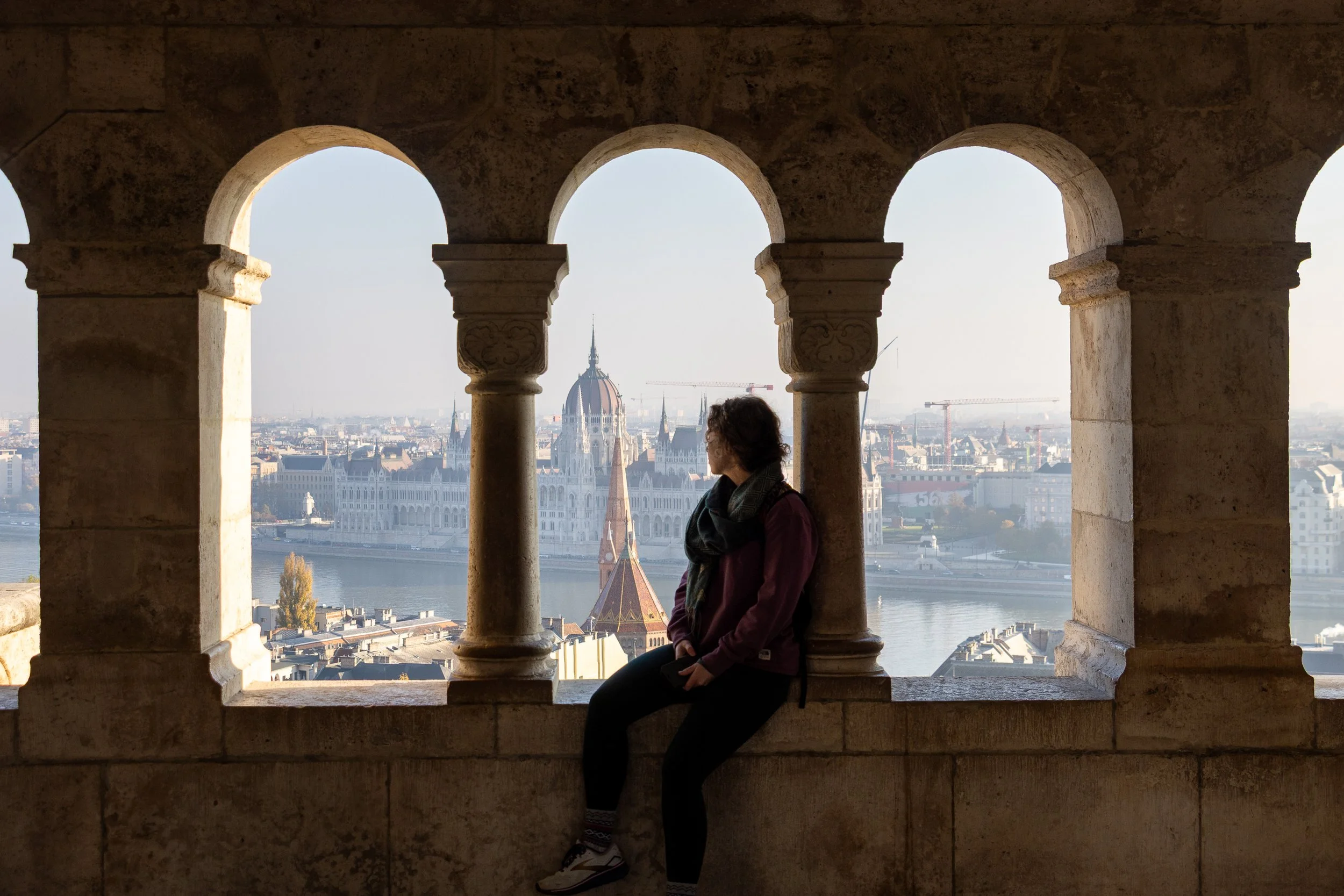
The mighty Danube River, once a natural border for the Roman Empire, runs through the middle of the Pearl of the Danube, Budapest. Also known as the Paris of Central Europe, Budapest is the second largest city in both Central and Eastern Europe. Approximately 3.3 million people call the capital of Hungary home.
On the West Bank of the Danube is the Buda half of Budapest, and on the east is the portion of the city that used to be known only as Pest. Along with a third city to the immediate north known as Obuda, these were all combined by Hungary to become one, large city and the new capital to boot.
Situated as it is on the Danube, Budapest has been a desirable city for many rulers, empires, and governments over the centuries. The allure of control over such a jewel has led to the city, and country, to be managed by Roman Emperors, Hapsbergs and Austrians, sultans and Turks, Nazis and other fascist parties, communists, and more. Changing hands as it has over the years, Budapest has an eclectic and violent history, steeped in a blend of cultures, languages, and ethnicities that have made it unique and independent among the great cities of the world.
What to Do in Budapest
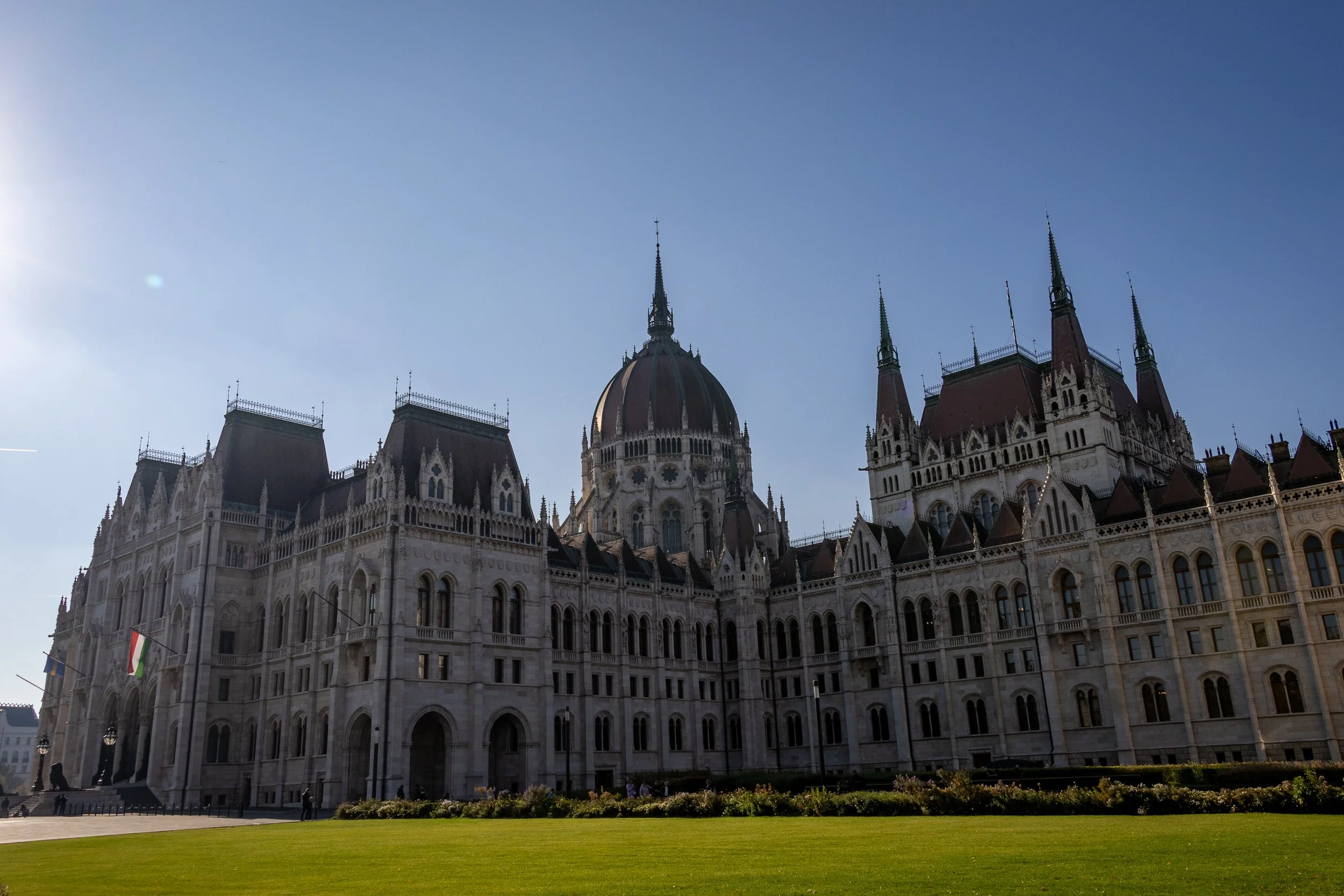
The Hungarian Parliament building is without a doubt one of the most architecturally stunning buildings in Europe. The edifice is imposing, and stands out prominently on the river, begging to be looked at. If a man’s eyes were drowning they’d still want to drink it in.
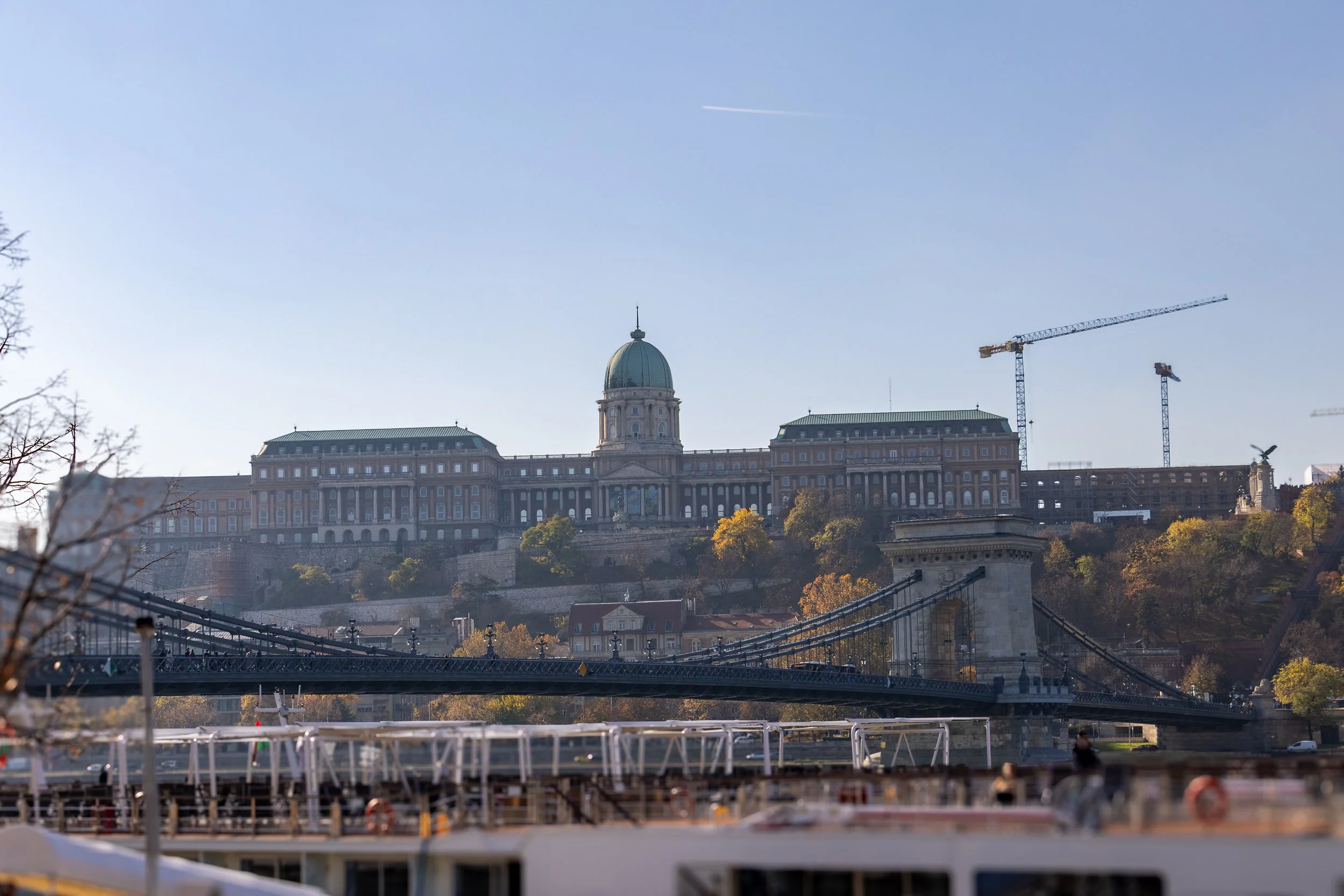
Buda Castle is the Royal Palace of Budapest, dating back to the 13th century AD. Like so many notable structures in Central and Eastern Europe, Buda Castle has sustained damage many times over the years, such that the building that sits on Castle Hill today dates mostly to the middle of the 18th and 20th centuries, with some older sections still evident within.
The castle today stands out proudly along the riverwalk, and if it takes your fancy you can purchase tickets for entrance, or book a tour. The grounds outside are free to wander, and the gardens outside are pleasant on a sunny day. The many steps can be an impediment, but there is also a funicular you can ride to the top of the hill for a small fee.
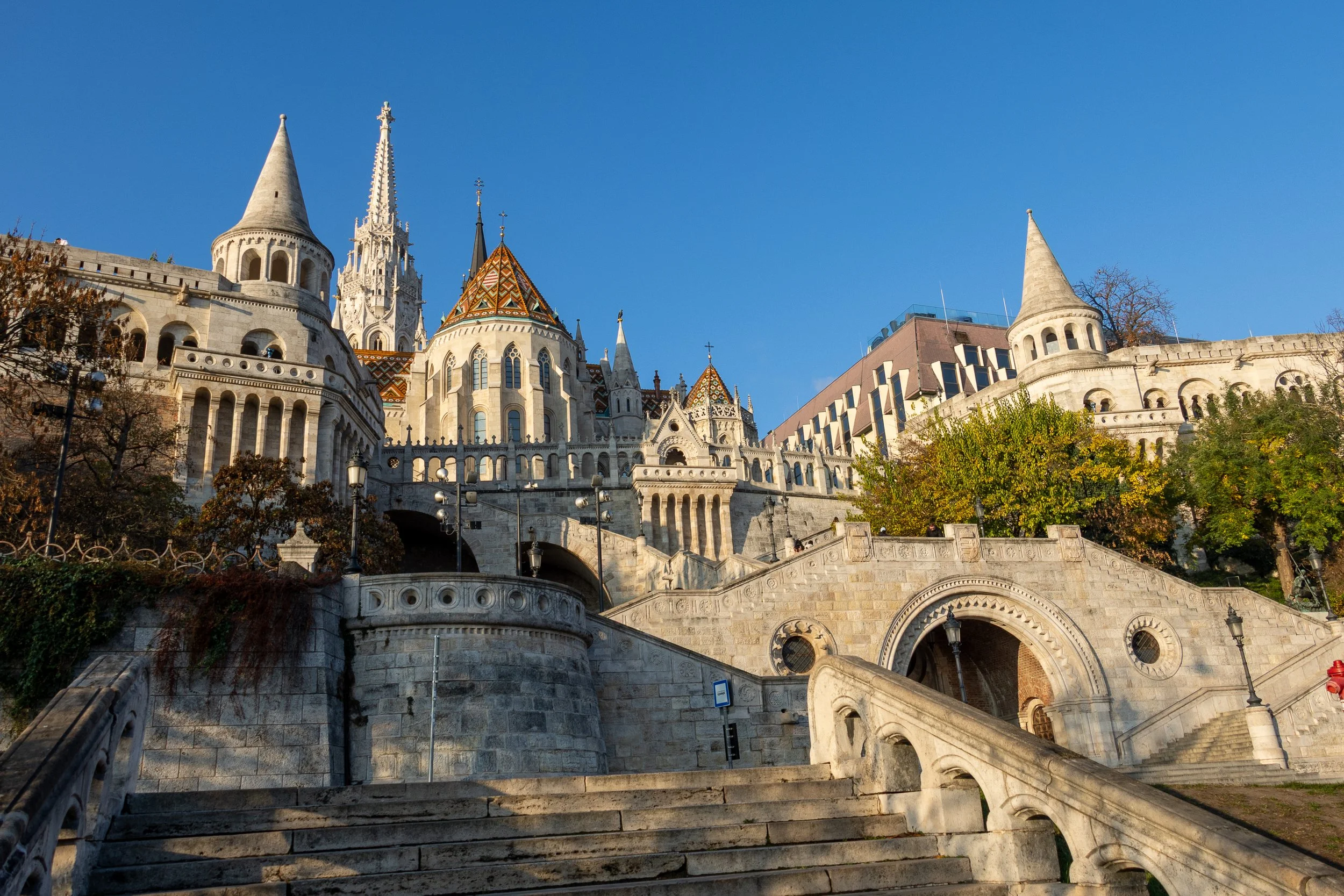
A short walk along Castle Hill will take you to the Fisherman’s Bastion, an odd name for a group of walls and spires at the top of a hill, where no fish that couldn’t fly could ever go. We’re not here to judge though, and it may be the most interesting group of walls and spires in Budapest, so the name is fine with us.
Some of the best views in the city are from the Fisherman’s Bastion, and from its ramparts you can see many of the other great sights in the city. It is a great place to start because it can help you map out the city in your mind, all of it laid out before you. It is also strikingly beautiful, so whether you look near or far you’ll behold some of the best of Budapest.
If naf when you do visit, get there early. 7 am is a good time to go if the sun is coming up. Few other tourists will be there at that time, and after 9 am it will be crowded. We have seen few urban settings as beautiful as Budapest from the Fisherman’s Bastion at sunrise. Another benefit of rising early to visit is that there are stairs leading to some of the walls that are ticketed after 9 am, but beforehand are free. The best views are from the walls, so save a few Forint and get out of bed.
Hungary was once a country known for its persecution of the Jewish people. Portions of Elie Wiesel’s book Night take place in the country during the Holocaust. Though much of the persecution can be laid at the feet of the Nazi party, there were perpetrators among the Hungarians as well, during and after World War II, as well as many heroic Hungarians who provided succor and assistance to Jews and ethnic groups facing death. History is never simple.
Today, Budapest is home to the largest synagogue in Europe, the Dohány Street Synagogue, which is capable of holding 3,000 people at once; it is the second largest synagogue in the world, and it offers free tours and guided tours for a fee. Near the river, it is easy to reach while sightseeing either on foot or with public transportation.
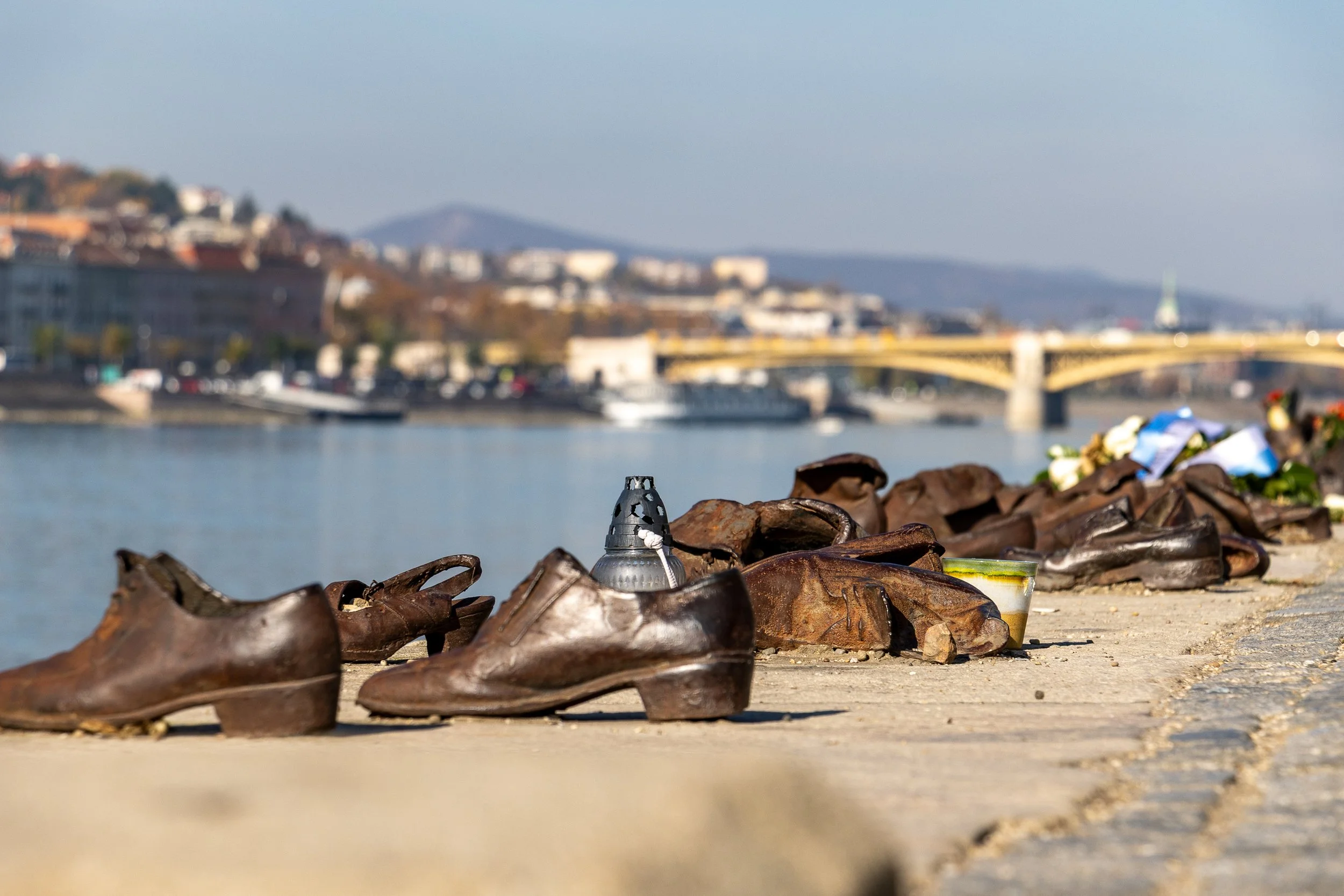
There is a piece of art, a group of metal Shoes on the Danube that are affixed to the concrete near the Parliament building. These shoes represent a terrible time and a singular act in the long and violent history of Hungary, when Jews were killed and their bodies dumped into the Danube. Any walk along the river near Parliament will take you by the Shoes.
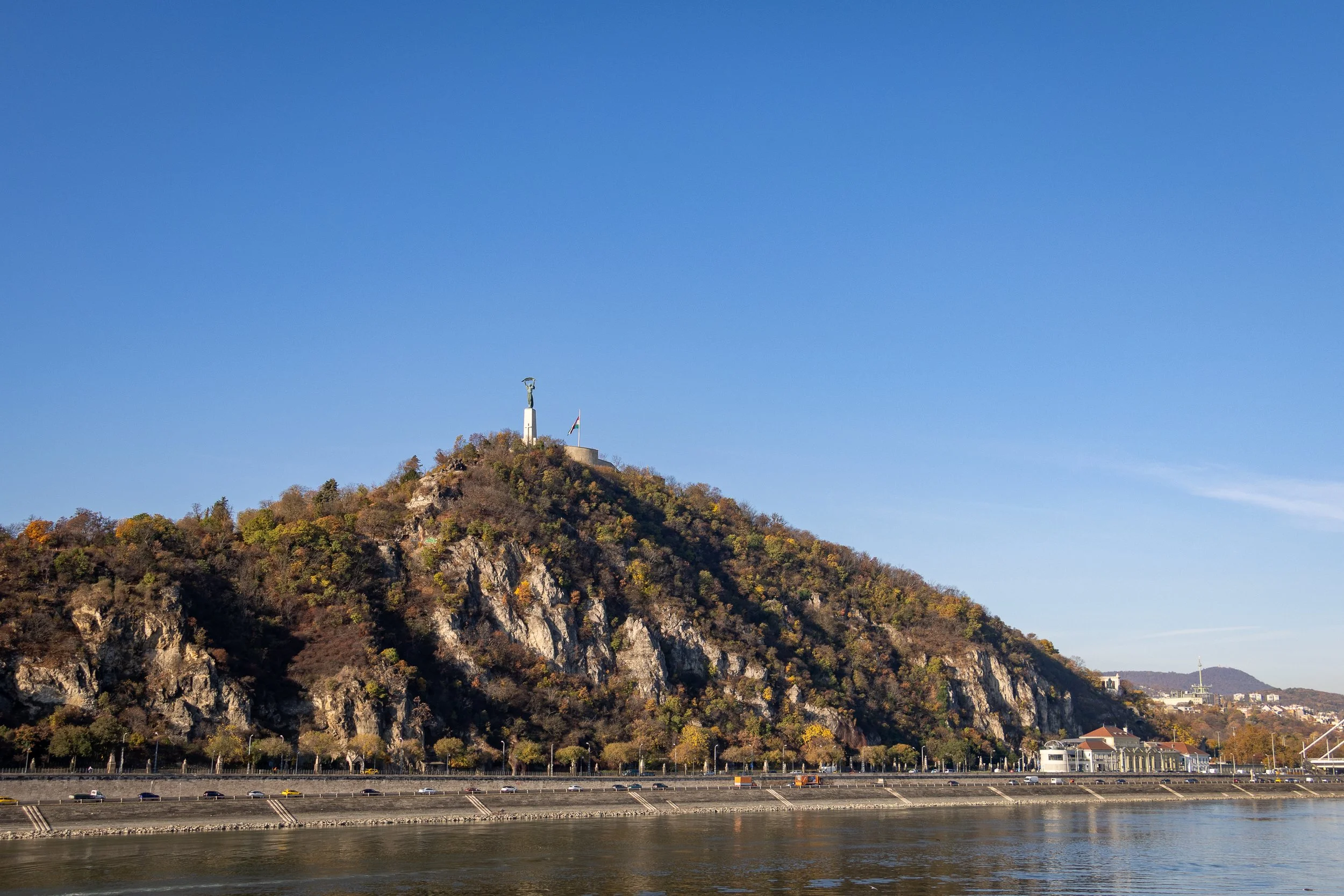
The Liberty Statue is visible on one of the hills overlooking the Danube, and is located on the grounds of the Citadella. The fortress was completed in the middle 19th century, and although it was never the site of a major battle, it played a significant role in the political and military machinations of those seeking to control the greatest city in Hungary, owing to the garrison and height of the artillery over the populace. Today the Citadella is the crowning glory of Gellért Hill and the many walking paths that crisscross it. The fortress itself has been closed for construction in 2025, but should be open at the beginning of 2026. If you are looking for a place to get into nature a bit and out of the city, this is it. Many walking paths crisscross the hill, offer great views, and are the closest thing to nature you’re going to find without braving Budapest traffic out of the city.
The Market Hall is one of those large, indoor farmers markets that every wannabe influencer makes videos about, as if it’s a prerequisite for “making it” on the internet. It is neat, and it’s worth going to, because it’s free, but the same thing exists in a myriad of other other cities, like Toronto or Cleveland. You’ll find plenty of stalls selling trinkets and souvenirs, bathrooms, and a quick bite to eat.
The real good stuff is at the food vendors selling paprika, sausages, and other wholesome items that locals or long term visitors are more likely to buy because they require preparation. There is a double bonus in the basement, which houses the olfactory offenders that sell sauerkraut, pickles, and fish. For such a strong smell, it really isn’t bad at all. A third bonus is the Aldi in the basement, so you can sightsee downtown by the river, and bring your groceries back to your Airbnb or hotel.
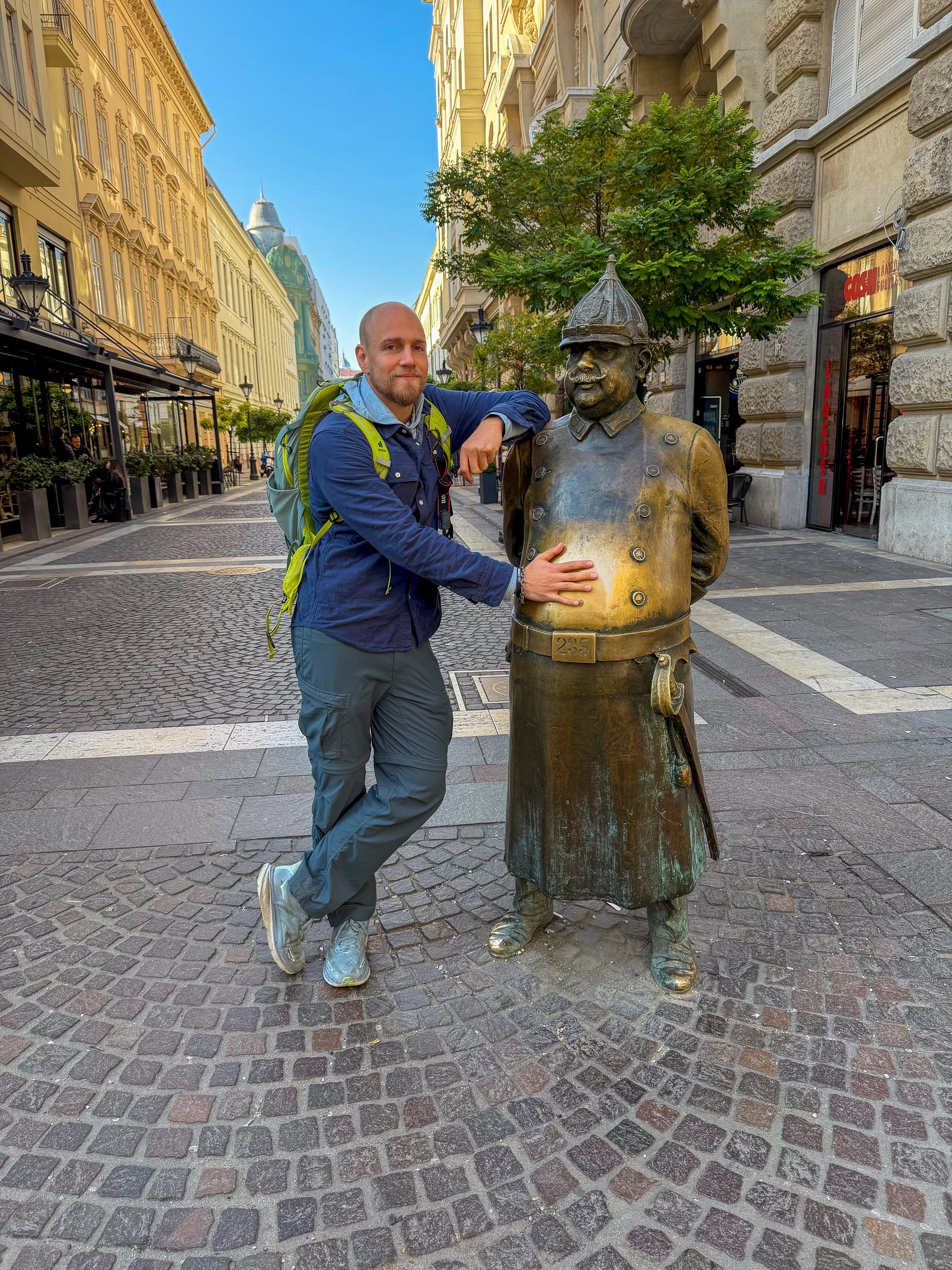
Finnish sculptor Kaarlo Mikkone left a Fat Policeman on a pedestrians thoroughfare in front of St. Stephen’s Cathedral, facing the church and away from the Danube. Rubbing his belly grants good luck, and many superstitious passersby have taken the chance to give the jolly copper a friendly pat, as demonstrated by his shiny midriff. There are plenty of excellent examples of other good luck statues to rub in the world, for instance in Florence and Verona.
Construction of St. Stephen’s Cathedral began in 1851 and was finished, as much as construction of a basilica is ever finished, in 1906. If you’ve ever visited an ancient church and wondered why the scaffolding is ALWAYS there, you know what we mean. It is named for King Stephen, first king of Hungary, whose right hand is held within.
Along with the Hungarian Parliament Building, St. Stephen’s was the joint tallest building in Budapest at 96 meters (315 ft.). The height decision was deliberate, demonstrating the mutual importance of worldly and spiritual concerns. There was a law on the books that prohibited buildings taller than these two, but that has since been done away with and the distinction of tallest building now belongs to the MOL Campus, an oil and gas company building, which I don’t think demonstrates the singular importance of capitalistic trends in a modern society, but who knows?
A common nickname for Budapest is the city of Spas, due to the more than 100 thermal baths people can bathe in. Hungary has many of these natural hot springs, and Budapest is no exception. There are 3-4 large baths that take the lion’s share of the publicity, but there are plenty of smaller establishments to visit. There are age limits to consider, due to the heat of the water posing a health risk for small children, and also probably because of poorly behaved small children annoying the paying adults.
Click this link for a map of our favorite places in Budapest!
How to Get Around Budapest
Budapest is easy to navigate. Google Maps works just fine, and we used it the whole time we were there. Wifi is available at every restaurant and cafe if you want to save your data, and the river offers an excellent landmark if you want to go phoneless for a while. It is a busy, bustling city with a lot of people coming and going, but the basics are simple. Most of the touristy or historic places are concentrated around the river, and you can certainly navigate between them uninterrupted. To shave some of the steps off of your adventuring, you can purchase single use tickets or batches of tickets to use on the trams or subway. Remember that you will need to validate your physical tickets at a physical validation machine before using the public transportation! This is important, do not forget to validate! Simply purchasing the tickets is not enough to avoid a fine if you are caught without a validated ticket. We were stopped ourselves, it does happen.
BudapestGo is the default app for many in the city for purchasing and managing their public transportation on their phones. Ourselves, we preferred the paper tickets but that was just a preference for our time in the city, and we also had a vehicle at our disposal.
Which leads us to cars. Renting and using a car is the same as elsewhere in Europe and the EU. The city is busy, rush hours are tough, and many streets are narrow. Parking can be difficult to find and difficult to use downtown, and you should not plan on using a car to get around the city center. Plan on walking instead for a more pleasant time. There are a lot of neat and interesting things to see while on foot.
If you are flying into Budapest, expect a normal experience.