
Nara Park, Japan
Dear oh dear, where to start? Nara is a city that sits between, and to the east of, Kyoto and Osaka. The first capital of Japan, Nara is most famous today for its bowing, sika deer. A type of spotted deer, these adorable and photogenic creatures dominate the social media presence of the city.
Nara Park is large city of nearly 400,000 people and holds many ancient and important buildings and sites. Its proximity to another longtime Japanese capital, Kyoto, and an important port city, Osaka, have kept Nara an important place to live and do business, even if it does not hold the spotlight much of the time.
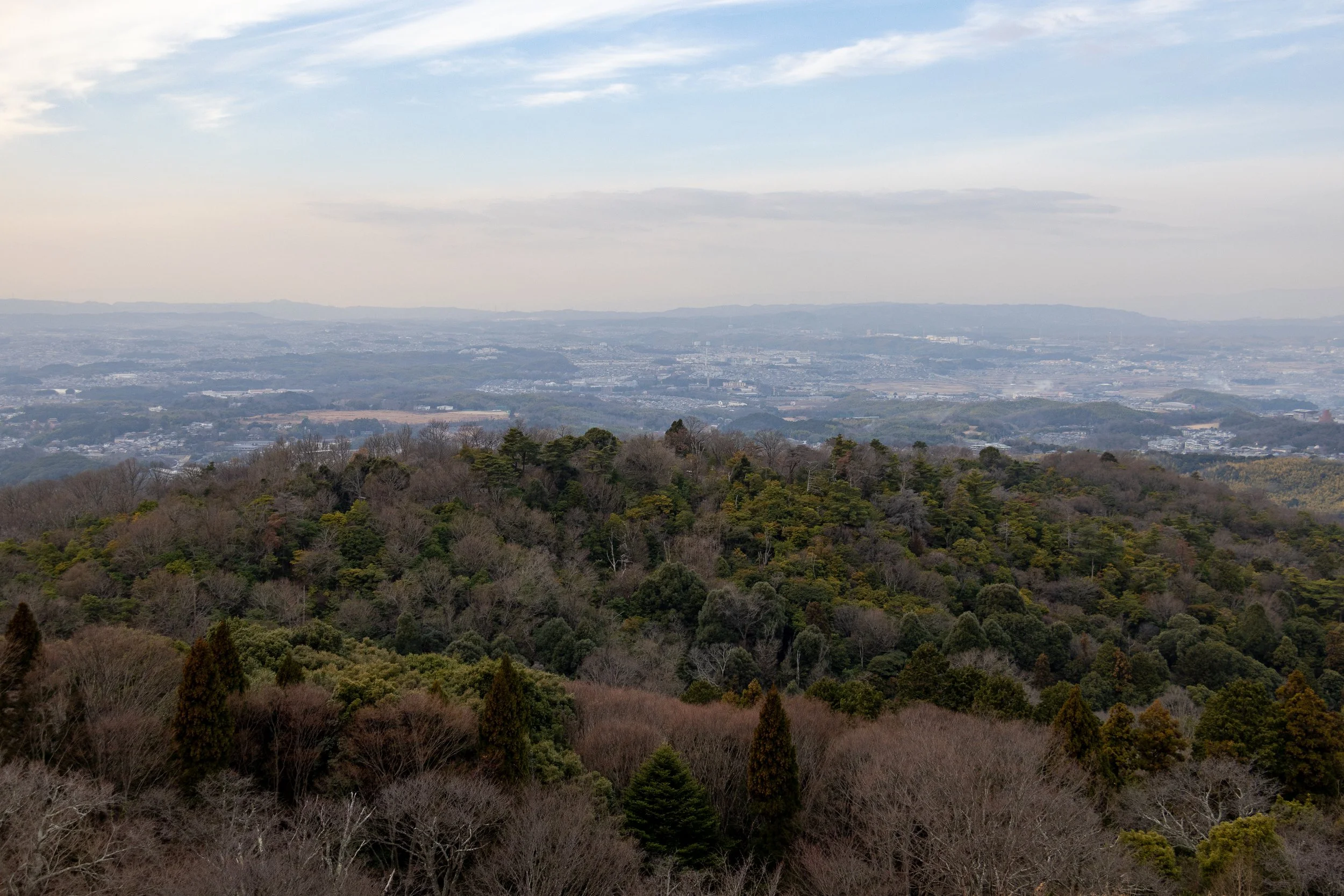
View of Nara from Mount Wakakusa
What to See in Nara Park
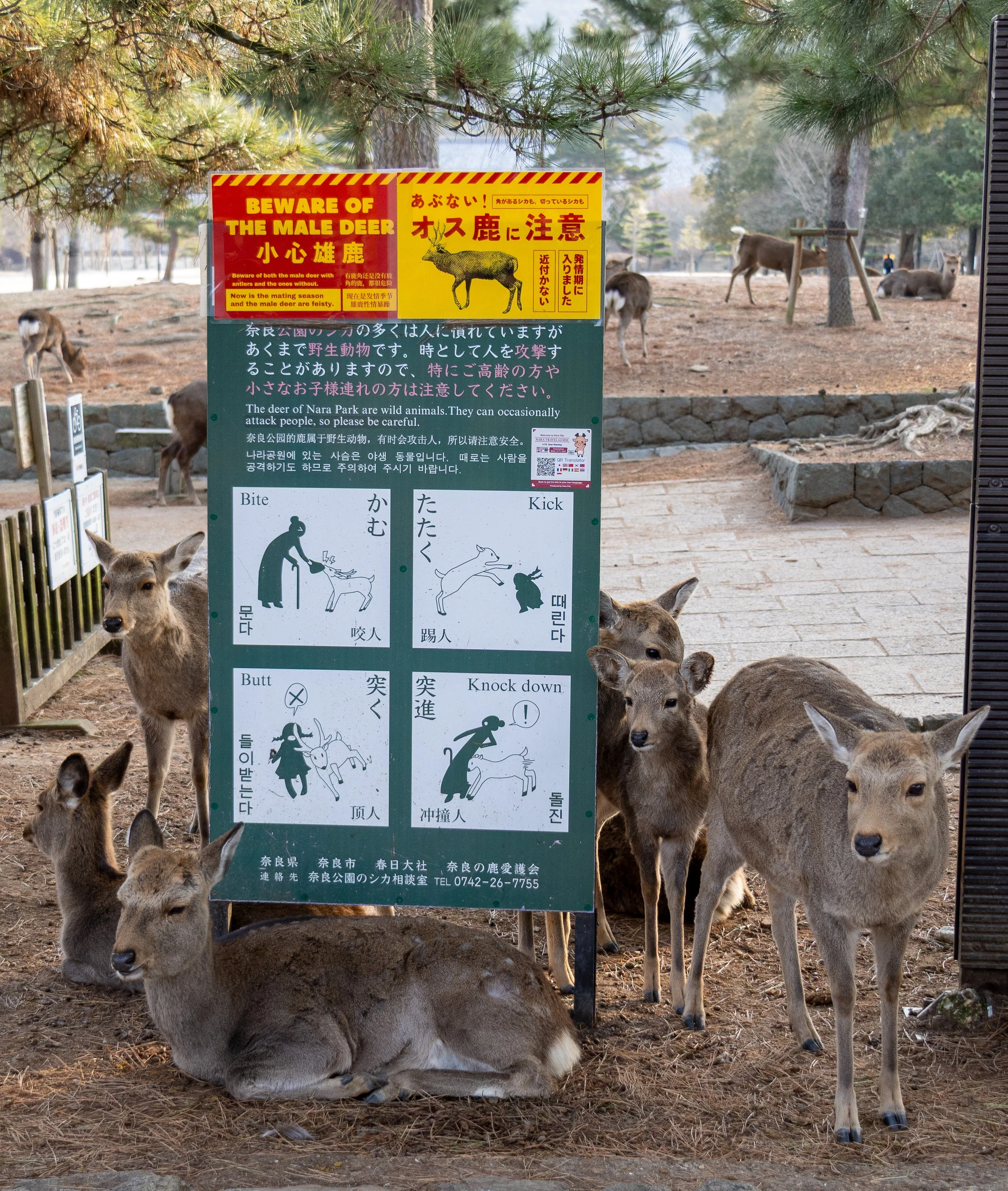
The deer of Nara Park
The park only occupies a small part of Nara City, the capital of Nara Prefecture. Though widely considered to be the first official capital of Japan, it only held that honor for 74 years, before the capital moved around for a decade, coming to rest in Kyoto for the next 1,100 years.
The sika deer are the stars of the show, and they make sure you know it if you are anywhere near Nara Park. The park is on the east side of the city and the deer inhabit all of it, and then some. Biscuit sellers will set their carts and barrows on the sidewalk near the entrance to the park as well as the avenue leading to Todai-ji, hawking their wares for 200 yen, as of this writing. The deer will bow to you to ask for some biscuit, but they will not always be polite. On the contrary, they can be quite insistent. You may have to bow first to trigger a responding bow, however, as the deer are as mercurial as any other wild animal.
It is best to remember that these are not domesticated pets, but wild animals. They may be aggressive, bite, headbutt, or otherwise pester or attack if provoked. They are nice most of the time, but are not tame.
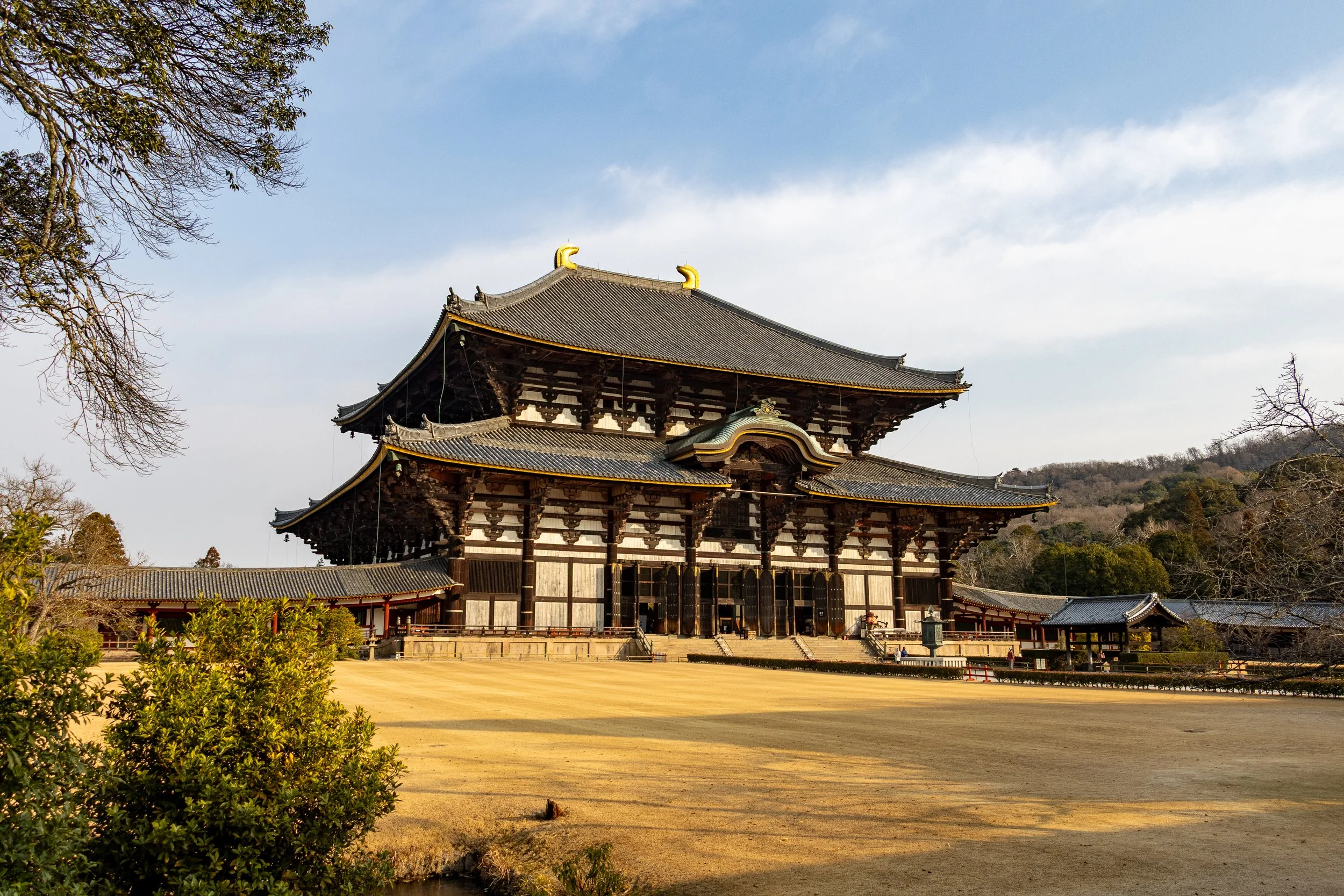
The Great Buddha Temple at Todai-ji
Higashimuki Shopping Street is just outside of Kintetsu-Nara Station, the closest stop that services the park. The Kintetsu-Nara line runs through the station, meaning if you want to take the train from Osaka or Kyoto, you will need to transfer at least once. Higashimuki is a great place for tourists to find gifts or souvenirs, grab a snack, or eat a meal. Any kind of food is available, and if you look hard enough you can find great options for good prices.
If you are looking for a meal but speak little or no Japanese, look for signs in English or your own language, and look especially for a menu in English. Those restaurants will cater to and expect English speaking travelers, and will not mind serving you. Those advertising in only Japanese, even though they are in a tourist area, may be hesitant to serve non Japanese speakers. If you are an introverted traveler, look for the English menu, and you can expect an easier experience. Or, learn some Japanese!
Todai-ji is a Buddhist temple complex in Nara Park that houses a massive statue of Buddha Vairocana, the largest brass Buddha in the world. That is not to say it is the largest Buddha in the world; that honor goes to the Leshan Buddha in Sichuan, China, or the Spring Temple Buddha, also in China, depending on how you measure. The Todai-ji statue is made of bronze, and the construction of the the statue and temple strained the resources of the entirety of Japan at the time. Both statue and temple have been rebuilt and repaired over time, due to damage by age, earthquake, and fire. The temple is the largest wooden structure in the world, so is extremely susceptible to the predations of fire.
Among the artefacts and features of the Great Temple, there is a Nostril. It is a square hole in one of the pillars that stand behind the Buddha. It is said that if you crawl through the Nostril, you will gain a degree of enlightenment in the next life.
Kofuku-ji is another Buddhist Temple on the grounds of what is now Nara Park. It, along with Todai-ji, was one of the Seven Great Temples in Nara.Another excellent example of Japanese architecture, the standout from a building standpoint may be the five tiered pagoda.
Mount Wakakusa rises above the park, offering excellent view of both the park and Nara City. There is a path up the lee side of the hill, the side opposite Todai-ji and the city, that is several kilometers long and we would rank as easy. The top is open and has several benches to rest on and enjoy the open views. If you are looking for something to get the blood flowing in Nara, the trails around Wakakusa are perfect. Be aware of the wildlife and the possibility of not only friendly deer, but also boar, snakes, and bear.
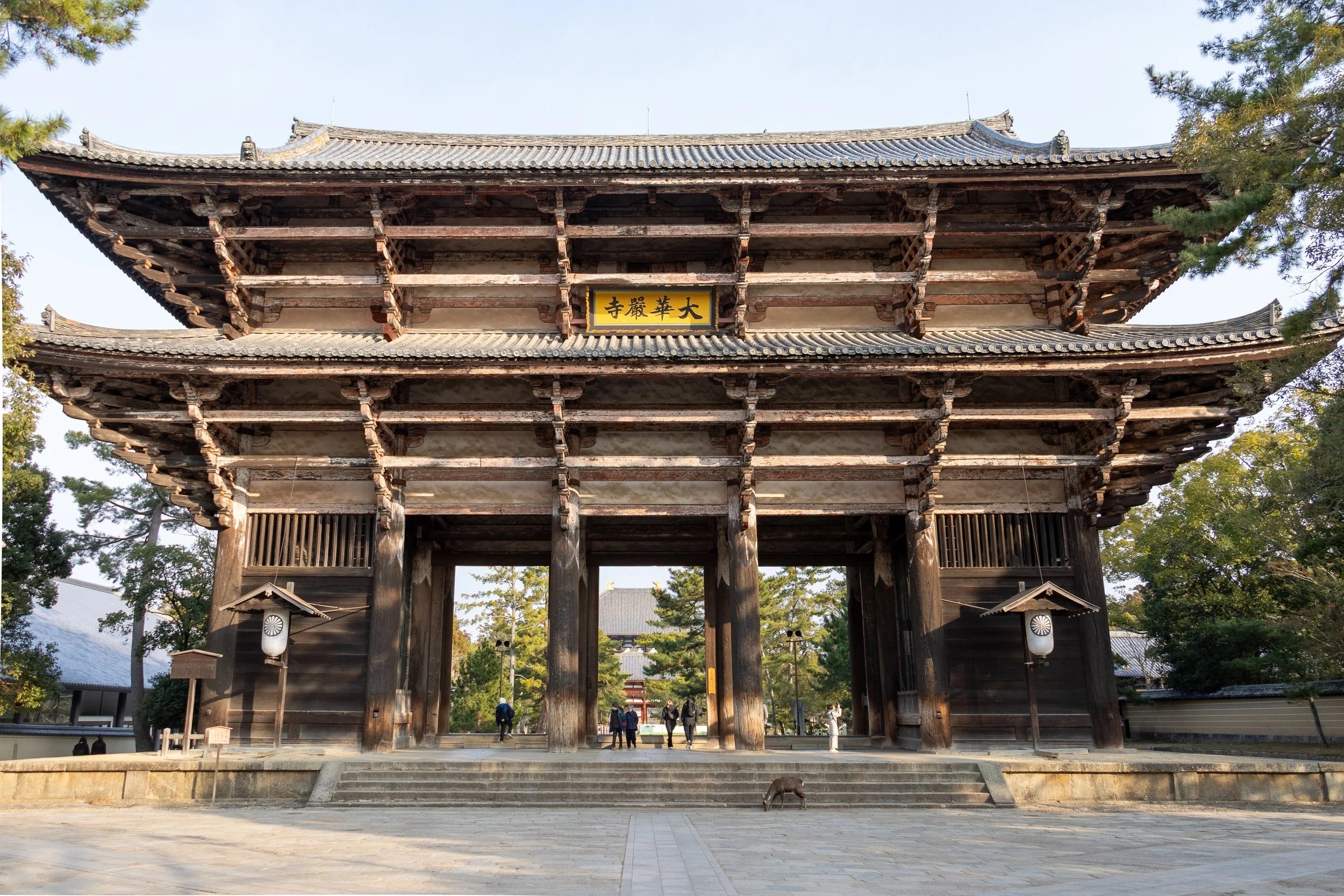
The Great South Gate at Todai-ji
Nara does not have an airport of its own. The closest airport of use for most people is either Osaka-Kansai International Airport (KIX) or Osaka-Itami International Airport(ITM). They are each roughly an hour and 30 minutes from Nara by bus or train.
If coming by plane to Nara, it would be fastest to land at either of the aforementioned airports. If coming by Shinkansen (bullet train), then you will disembark at either Kyoto Station or Shin-Osaka Station, and take a connecting train to Nara. Rental cars are of course available, as well as taxis, ride sharing, and buses.
Once in Nara, transportation is the same as in other Japanese cities. There is a central system of train/metro options supplemented by bus routes, for which you can purchase single use tickets or use your transit card. Biking and walking are easy to do.
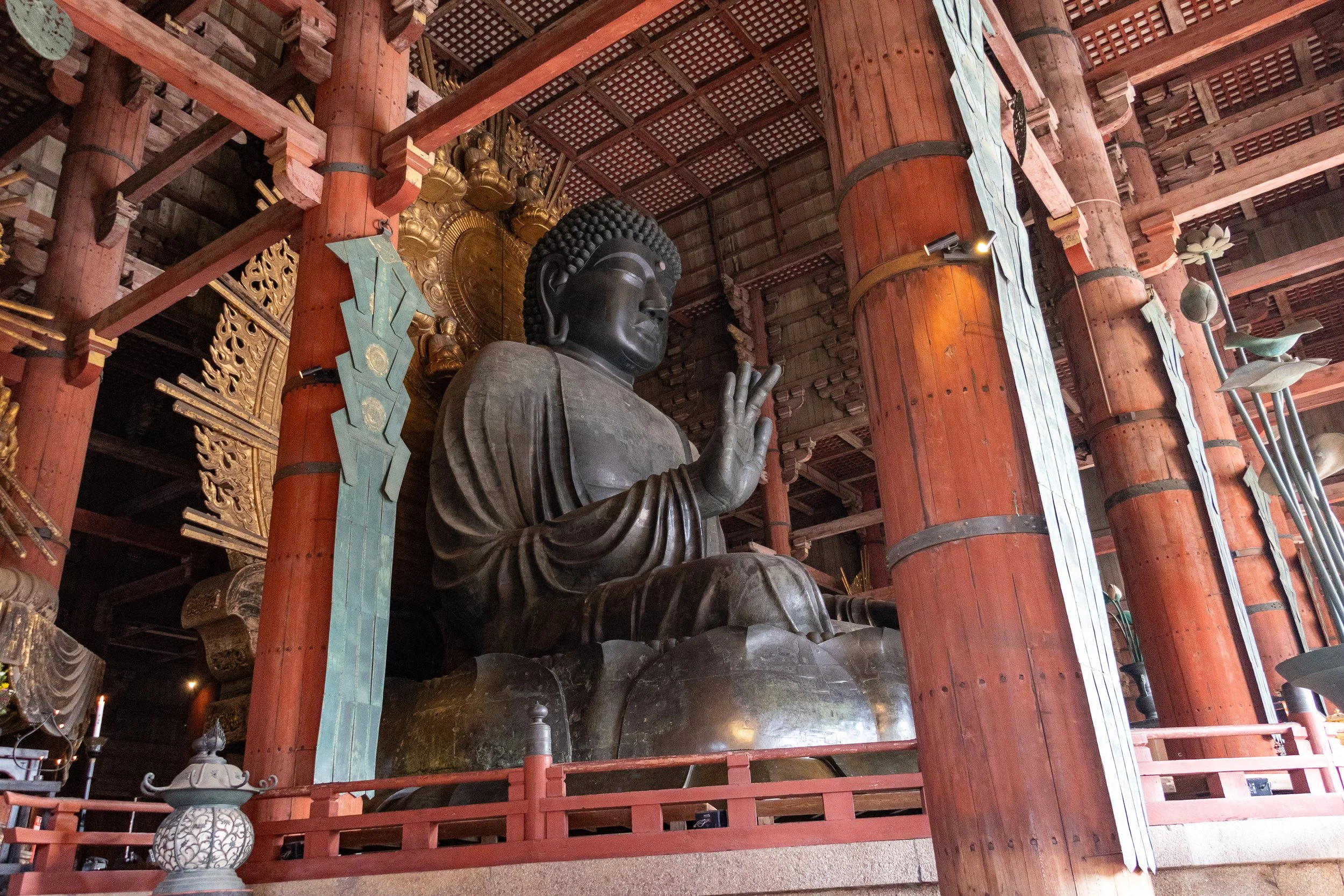
Buddha Vairocana