
Kyoto, Japan
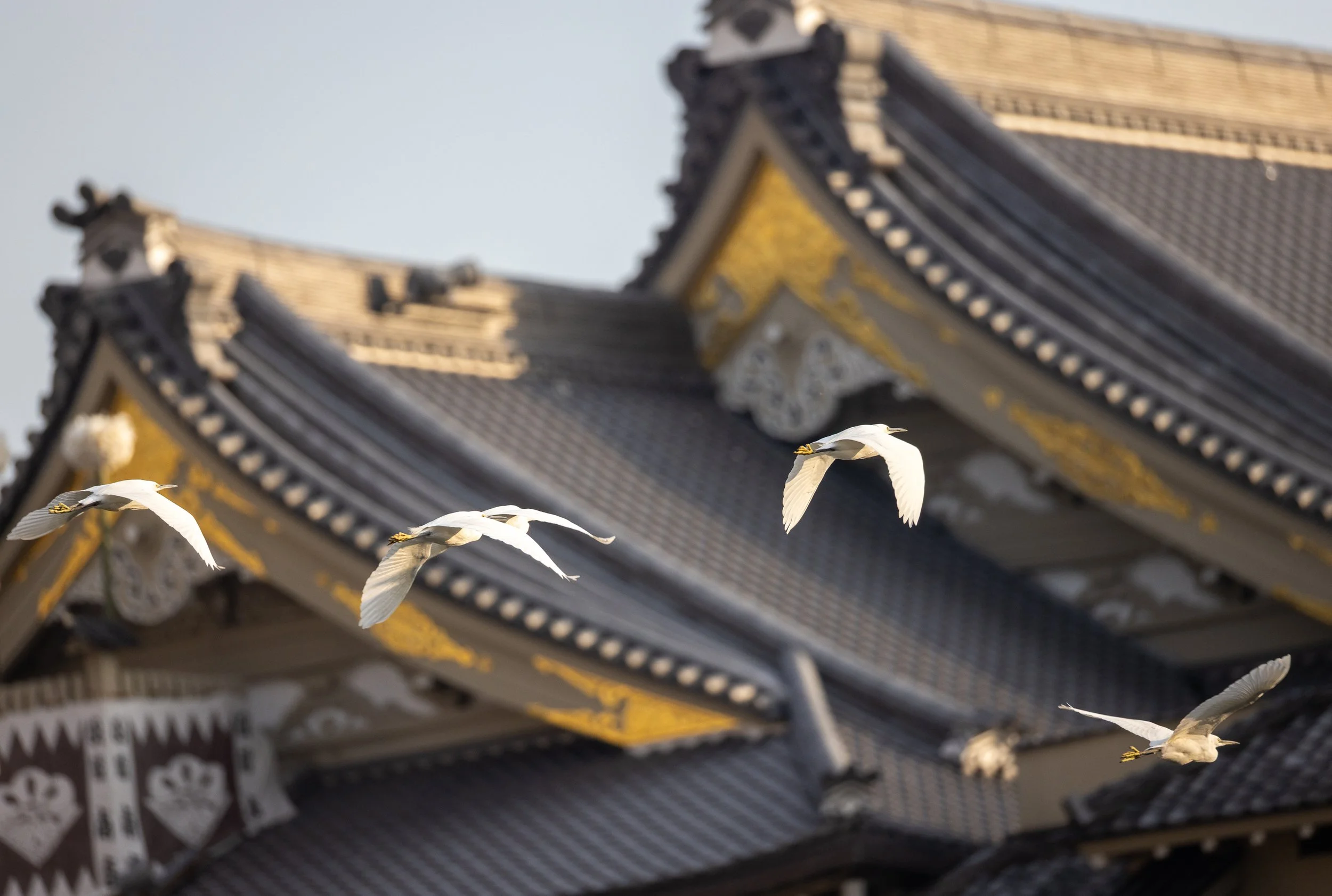
Kyoto was the capital of Japan for 1,100 years. Ater the Meiji Restoration the capital was moved to Tokyo, in 1868. Having been the epicenter of Japanese culture and power for so long, it is simply full to bursting with Buddhist temples, Shinto shrines, Imperial palaces, and places of historical significance.
The city is much smaller than Tokyo, with just over 2.5 million people in the entire prefecture, as compared to 37 million in the Greater Tokyo area. Kyoto is much older than Tokyo and was spared much of the destruction by fire that many other cities in Japan endured during World War II. Already a cultural and historical center, it has become ever more important since the war because of the destruction of many ancient and traditional buildings, and the preservation of Kyoto’s shrines, temples, palaces, and homes. Because of the tendancy to build with wood and other materials that weather poorly over centuries, what is left in Kyoto and other places in Japan draws great interest from historians.
Kyoto is quiet as far as major cities are concerned, especially after visiting Tokyo. There is an immediately noticeable size difference, a lack of larger buildings and skyscrapers, and many older buildings, mainly wooden and traditional. The feel of the city is completely different than the current capital, offering two vastly different versions of Japanese culture to enjoy.
What to Do in Kyoto
There are Pokemon Centers all over Japan, but not in every city. There is one in Kyoto, on the second floor of the Kyoto Keizai Center Building. Good for all things Pokemon, you can purchase the newest card packs from Pokemon Centers as well as location specific merchandise, like gym badges or special stuffed toys. These are popular with tourists and locals alike.
Walking the Imperial Palace grounds should be on everyone’s list. The park and gardens around the palace are free to enter and walk around, and offer a glimpse into the scale of the imperial family’s influence in the former capital.
There were several palaces over the 1,100 years Kyoto enjoyed its exalted status, so you have your pick of former palaces to peruse.
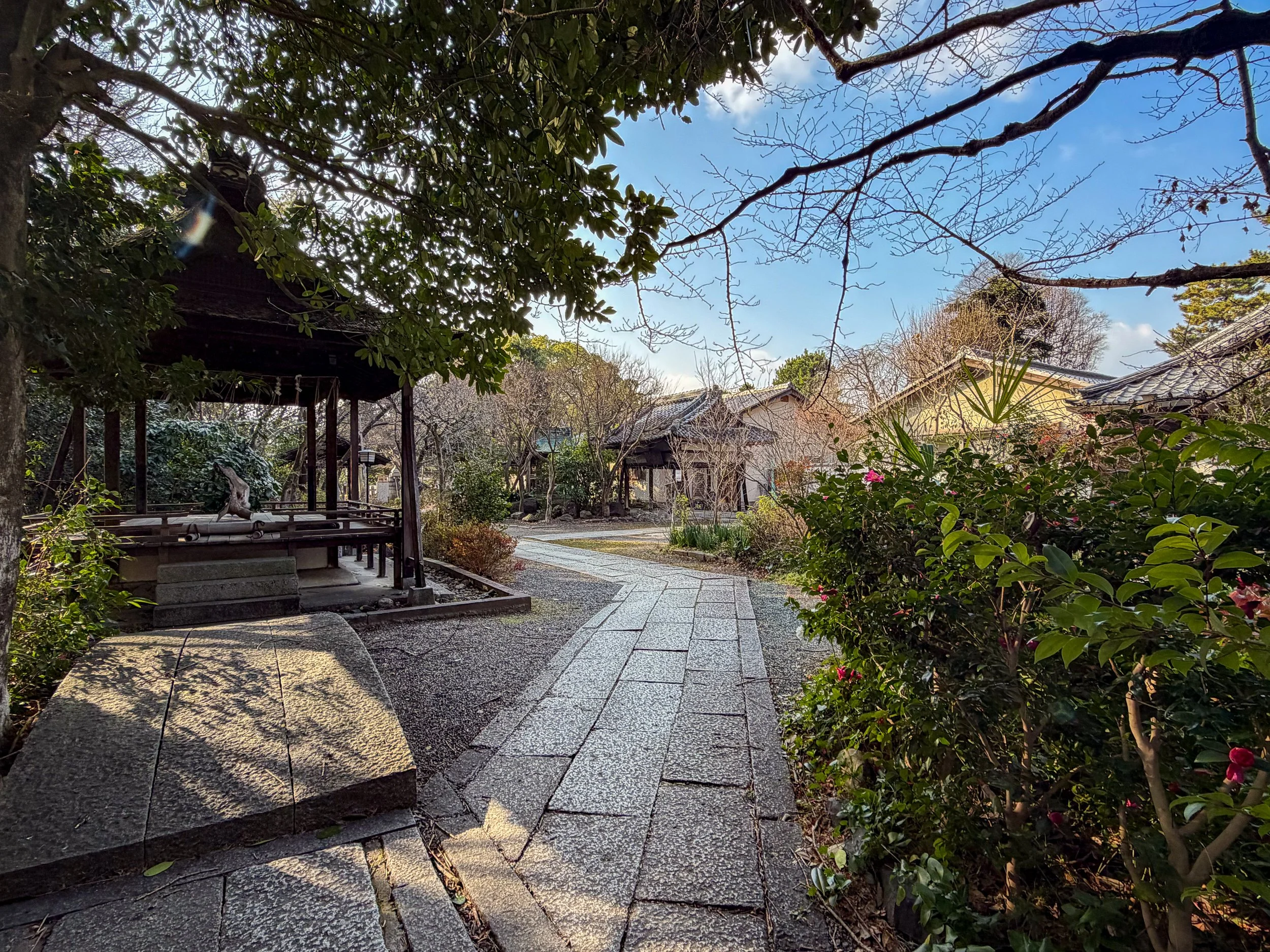
Arashiyama is an exceedingly popular tourist location. The bamboo forest and shopping street are the stars of the hype, and they are pleasant, but too many people spoil the serenity of the trees and pathways, which are far too few . Come early in the morning if you want to avoid the crowds, which can be large.
We would rate this place as overrated. There are larger and less occupied bamboo stands and forests outside of the cities, so if you want to enjoy nature, get out of the city. Depending on where you are staying in Kyoto, it may even be quicker to take a trip outside the city.
Traveling to Arashiyama will require a bike, a car, or taking the JR or Randen lines. We suggest avoiding the Randen; it is an older line, quite rickety and jarring to ride. The JR line is more convenient and comfortable.
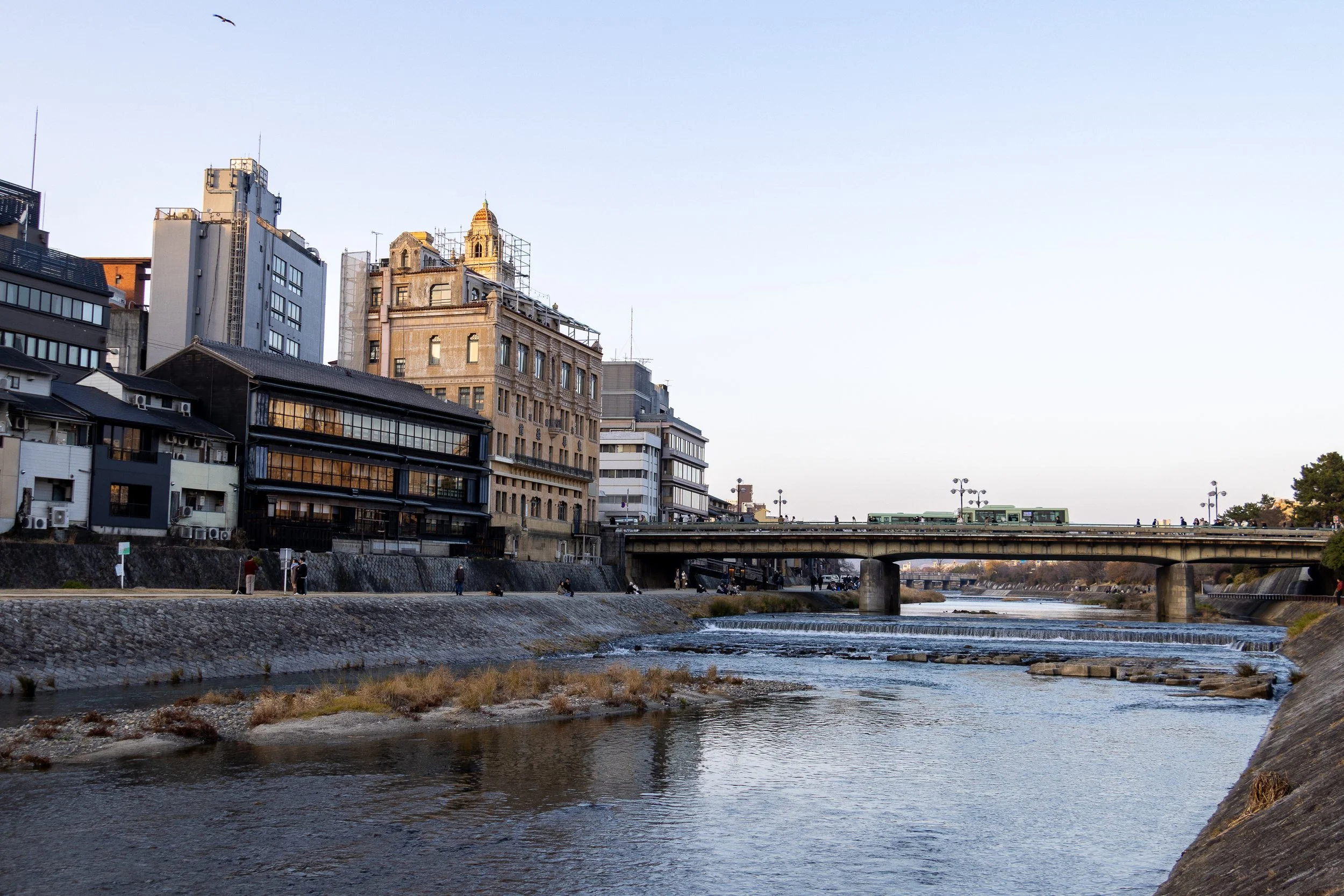
A walk or bike along the Kamo River is one of the crowning activities you can enjoy for free. Miles of paved, gravel, or dirt paths line each side of the river and plenty of waterfowl inhabit the space between. You may even see one of the invasive and ugly/cute Nutria.
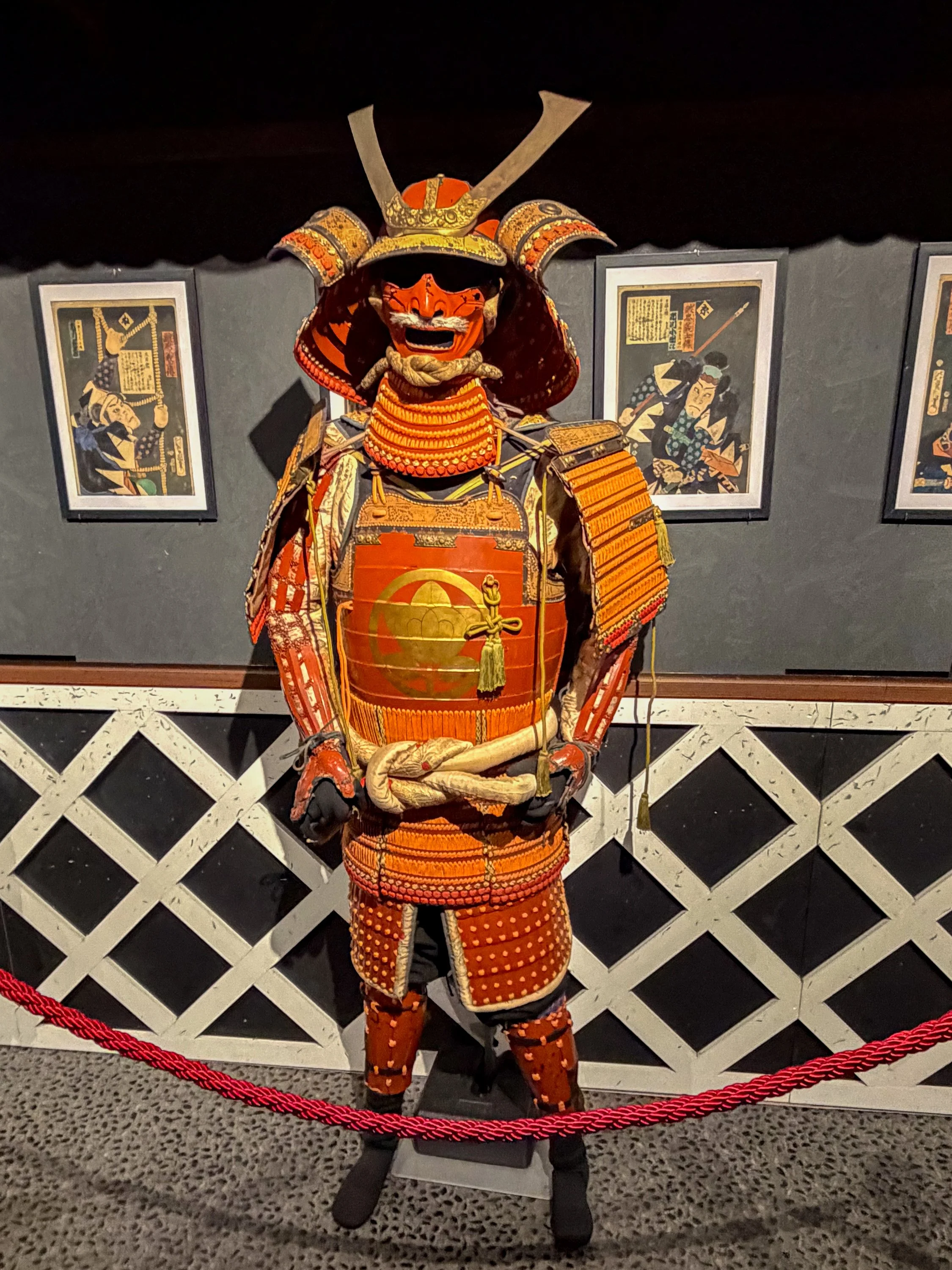
The Samurai and Ninja Museum is a great place to spend an hour, or more, learning about the bulk of Japanese history, if only on a surface level. They offer a guided tour through their exhibits, which include samurai paraphernalia, as well as more interactive demonstrations of samurai life.
This may not be of interest to adults who have a more than passing knowledge of Japanese history, unless you are traveling with children. Kids will love the pacing and content of the tour, and it is not too long to bore them. The activities like sword making may be a better option for adult groups.
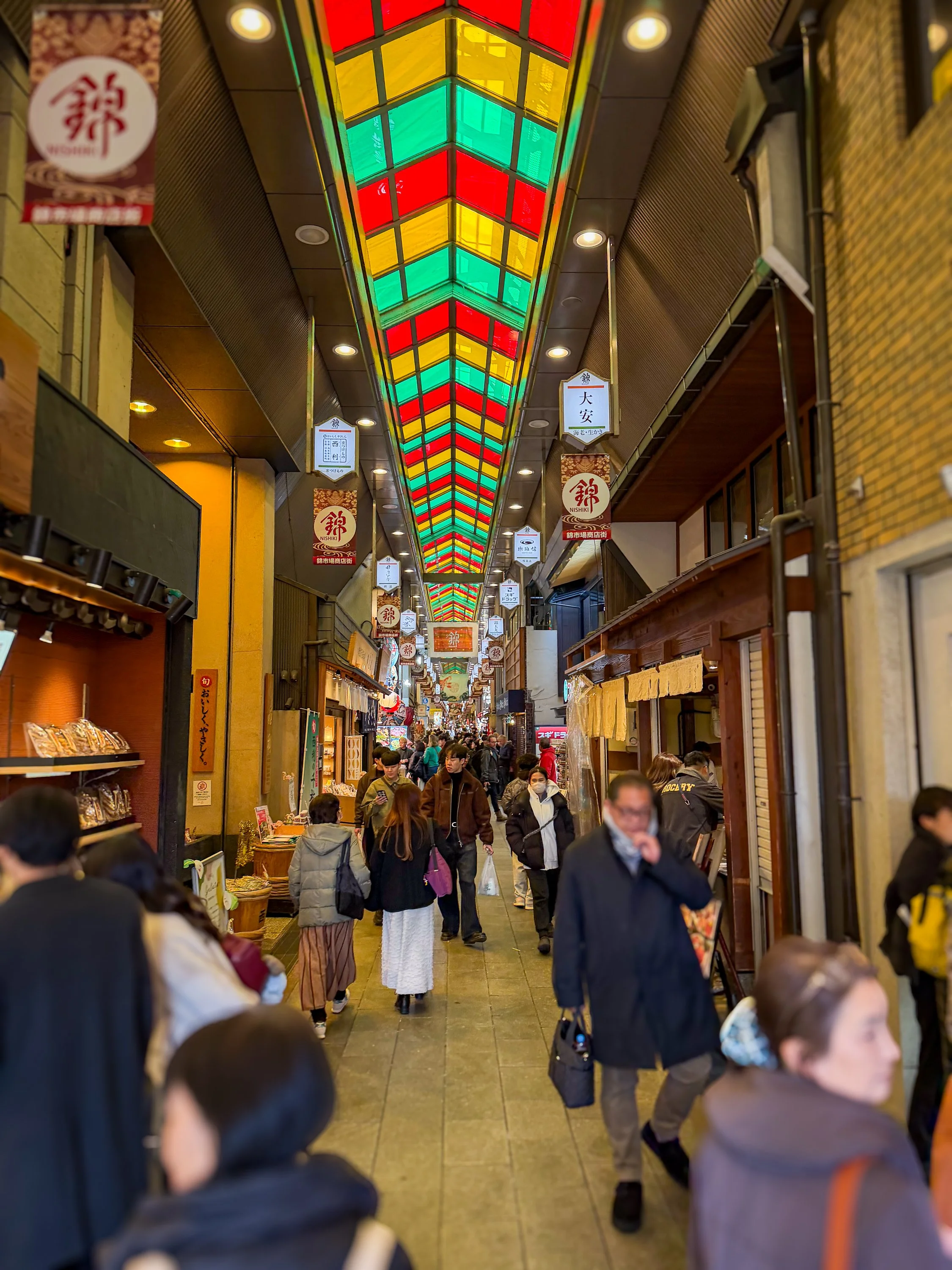
Nishiki Market is a series of connected streets packed with food vendors and other shops. It can be crowded, and the food is good but do not expect to find a bargain. It is a lively area that knows it attracts tourists, and so charges accordingly.
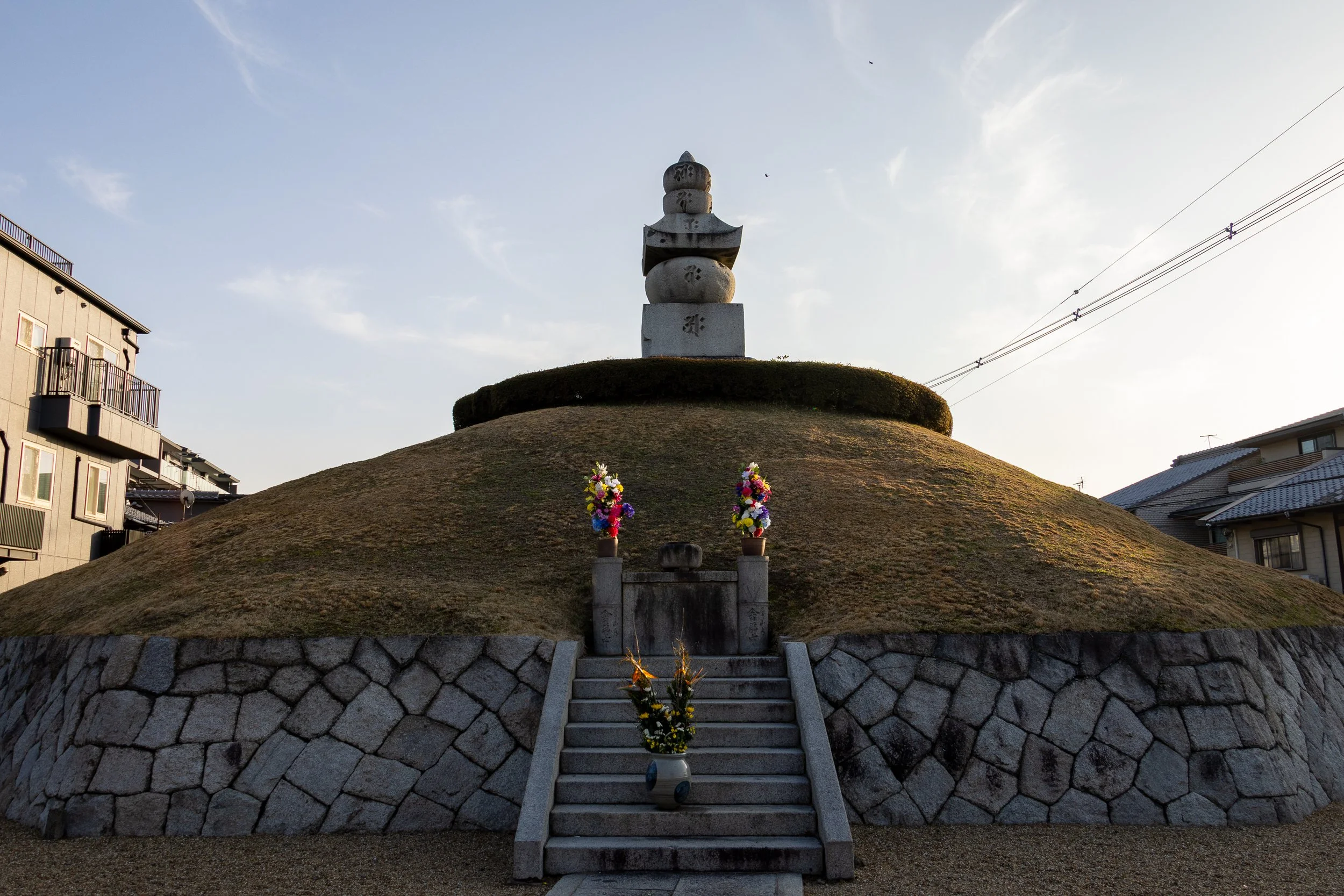
Mimizuka is one of the weird places you tend to find in cities as old as Kyoto, places that fill in historical gaps you didn’t know were there, and color how you think of a time and people long passed into legend.
Translated into English, mimizuka means something like “hill of ears”, which is not… exactly what it is. It is, in fact, a hill of noses. During the Imjin War, the Japanese invaded Korea, and the samurai of the time were in the habit of collecting the heads of their fallen foes. Korea is a long way from Kyoto by foot and ship and horse, and there were a lot of heads that they needed to relocate from bodies in Korea to a big ol’ pile in Japan. Pragmatists that they were, the samurai adjusted their approach and opted for the much more manageable nose, as opposed to the whole head, as trophy and proof of their valor in battle. These olfactory treasures were pickled, barreled, and shipped off to Kyoto, where they reside today under a mound of dirt.
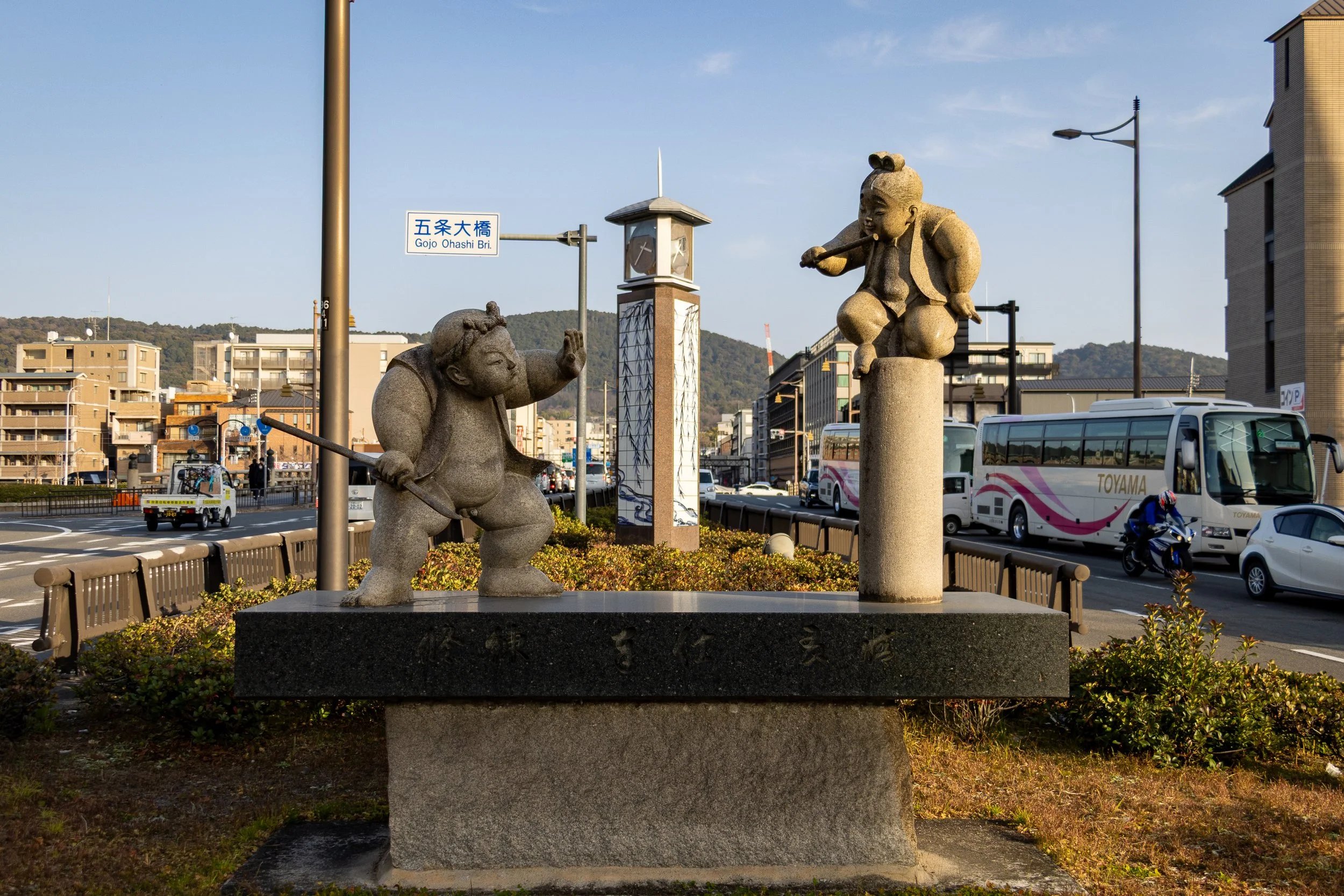
There is a statue of Yoshitsune and Benkei, two real life figures who are prominent in Japanese history, that stands just west of the Gojo Bridge, in a median that you can only reach on foot, or bike. It depicts the lordly and diminutive Yoshitsune, also known as Ushiwakamaru, and the large and imposing Benkei about to engage in combat for the right to cross the bridge. In reality, Benkei was a dedicated warrior monk, and his lord Minamoto no Yoshitsune was a pivotal force in the Genpei War.
There are many stories about both of these intrepid characters, some true and some enlarged in the retelling of centuries worth of folktales. For the cost of admission, it is worth it to take a brief few minutes from your river walk to see a bit of history.
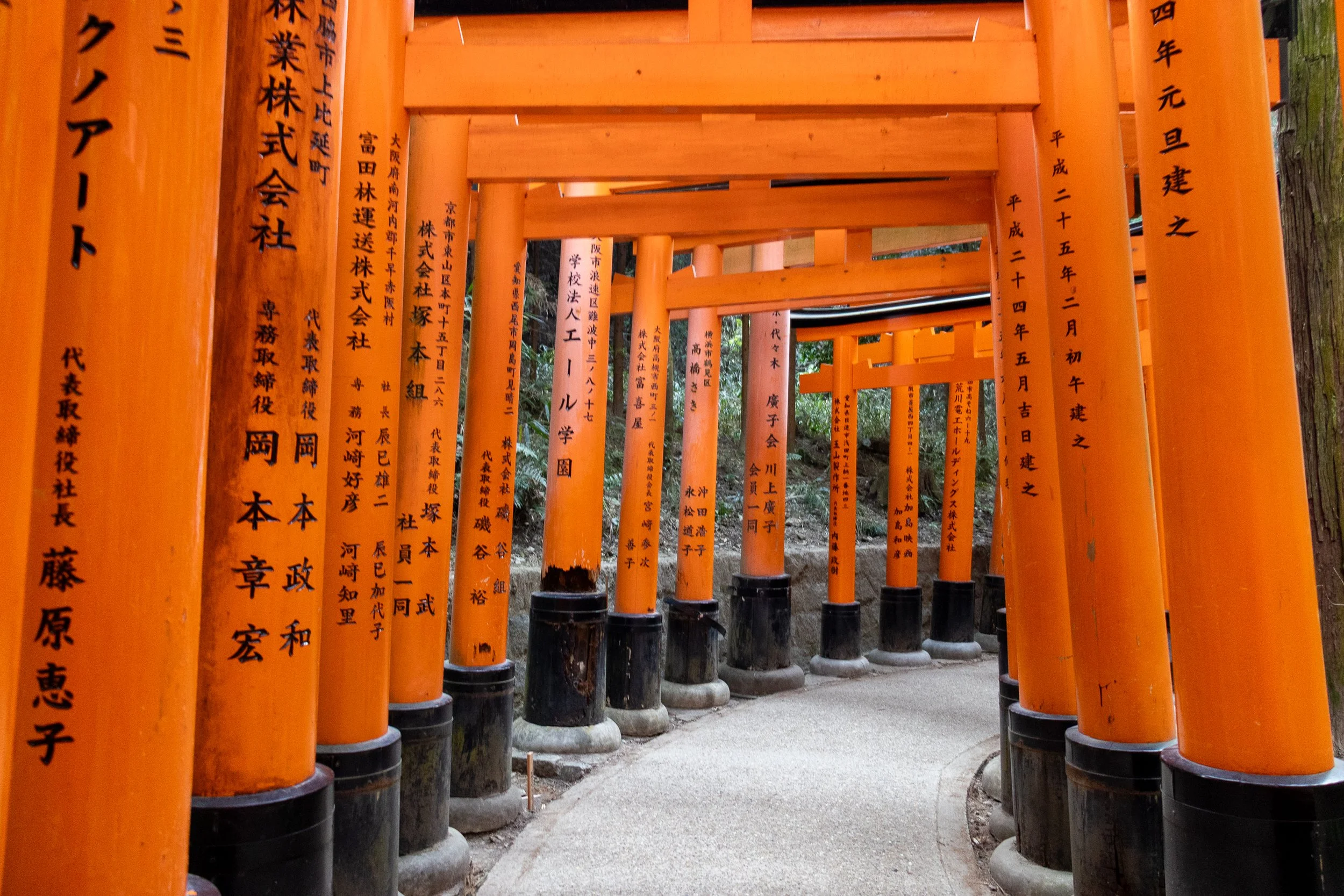
Fushimi Inari-taisha is the name of a Shinto shrine, founded in the year 711 (no relation to the conveninece store). It occupies space at the bottom of Mount Inari, and smaller shrines that are considered to be part of the overall complex are dotted up and down the trails to the mountaintop. It is most well known worldwide for its approximately 10,000 torii, or gates. The torii are a place that demarcate passage from the material world to the spiritual, or mundane to sacred, and kami, or deities, are thought to pass through them.
While these torii can be observed at Shinto shrines across Japan, the sheer quantity at Inari make the place unique. The shrine is located just outside of downtown Kyoto, on the east side of the Kamo River.
How to Get Around Kyoto
The public transport system works much the same as in Tokyo, with trains and the subway being nearly identical. You board (at the back or middle) and exit (at the front) the buses in the opposite way, but a glance at the signage tells you all you need to know. Change machines can make change for small bills, and you pay with exact change at the front of the bus when you exit, or use your transit card or day pass. The change machines take smaller bills, not the largest denominations, so make sure you either have change before boarding or some small bills to get change if you are paying in cash. If you are going to be in Japan for more than a few days, we suggest getting a transit card, it is just quicker and easier.
There is a one day pass for the subway and bus available, and a one day pass for just the subway, which can be purchased at vending machines or at ticket machines in a station. These are good for the day you use them, not for 24 hours. The pass for the subway is much less useful as there are only two lines you can use with the pass, and these cross each other like a plus sign, dividing the city into quadrants. The bus+subway pass allows you to reach those areas in the quadrants without walking, and can save you valuable hours and miles of effort.
Kyoto is perfectly walkable, but large enough that you will never get anywhere if you only go on foot. It is car friendly, and there are plenty of places to rent a car, including the usual suspects but also Toyota and Nissan, who operate rental services throughout the country.
Bikes are another great option, and are available for rent all over the city. Your accommodation may have them for rent or included in the price, so look for that as an amenity. You can often park your bike for free, especially outside of the city center. You may need to park in a bike lot or parking space, and there may be a small fee. Many bikes come with a lock built into the wheels with a key you can take with you, so be on the lookout for that, as opposed to a chain and lock, which is more rare.
Money
Take several cards with you, on different networks (Visa, MC, Amex, etc.).
Japan uses cash extensivley. You will want cash right away, and a decent amount.
You may need an ATM that states it works with International cards in order to withdraw money.
As far as money is concerned, card usage is widely accepted, but not universal. Japan is heavily dependant on cash, much more so than most other modern countries. Best practice is to have at least two credit cards with you on different networks, possibly a third debit card to access ATMs.
Many ATMs will not take foreign cards, meaning cards issued outside of Japan, and there will be places that only accept cash, or you may find that your card will not work on a train station ticket machine, or on a bus. Most buses only take a transit card or cash.
To find an ATM that will work, first start at the airport. All international airports will have ATMs advertised as working with overseas cards, and that is what you are looking for, signage that states '“overseas or international cards”, or something similar. There will likely be an option when making a withdrawal to select overseas or international cards, and that is what you want.
The next best place to find an ATM is larger train stations. Tokyo Station, Ueno, Shinagawa, Kyoto, etc. These will have several that should work. With that being said, your debit or credit card may work just fine at the thousands of ATMs to be found in banks, 7-11s, Family Marts, and other establishments you will pass a hundred times every day. Ours never has, but yours may.