Biggest Week in Birding
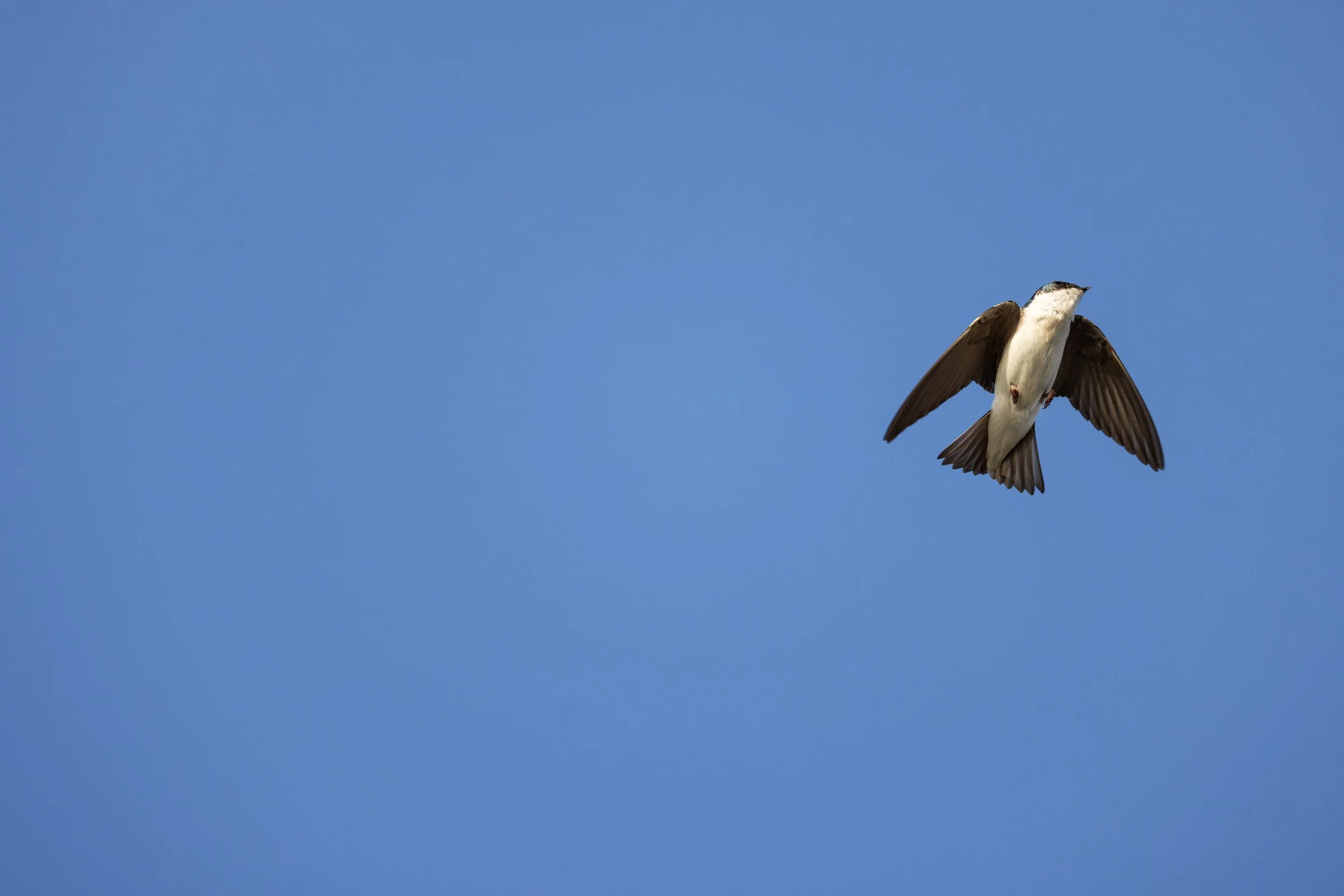
Tree Swallow (Tachycineta bicolor)
Billed as the Biggest Week in American Birding, the weeks surrounding the beginning of May in Ohio, on the shores of Lake Erie bring all the birds an ornithological enthusiast could ask for, in numbers that boggle the mind.
The BWIAB refers to an annual festival, a decentralized group of events, talks, vendors, tours, and walks focused on the spring migration of a multitude of birds, from the tiny warbler to the larger osprey, heron, and eagle. This festival is put on and organized by the Black Swamp Bird Observatory, and events are held at various locations near the coast of Lake Erie, mostly nature centers, parks, and conservation areas.
The migrations occur at different times for each species and actually range from February to June (and of course in reverse in the fall), with the festival being held at one of the peak migration times for many birds. It is coincidentally held at a nice time of year for us humans as well; not too hot, not too cold for a walk in the woods or along the shore.
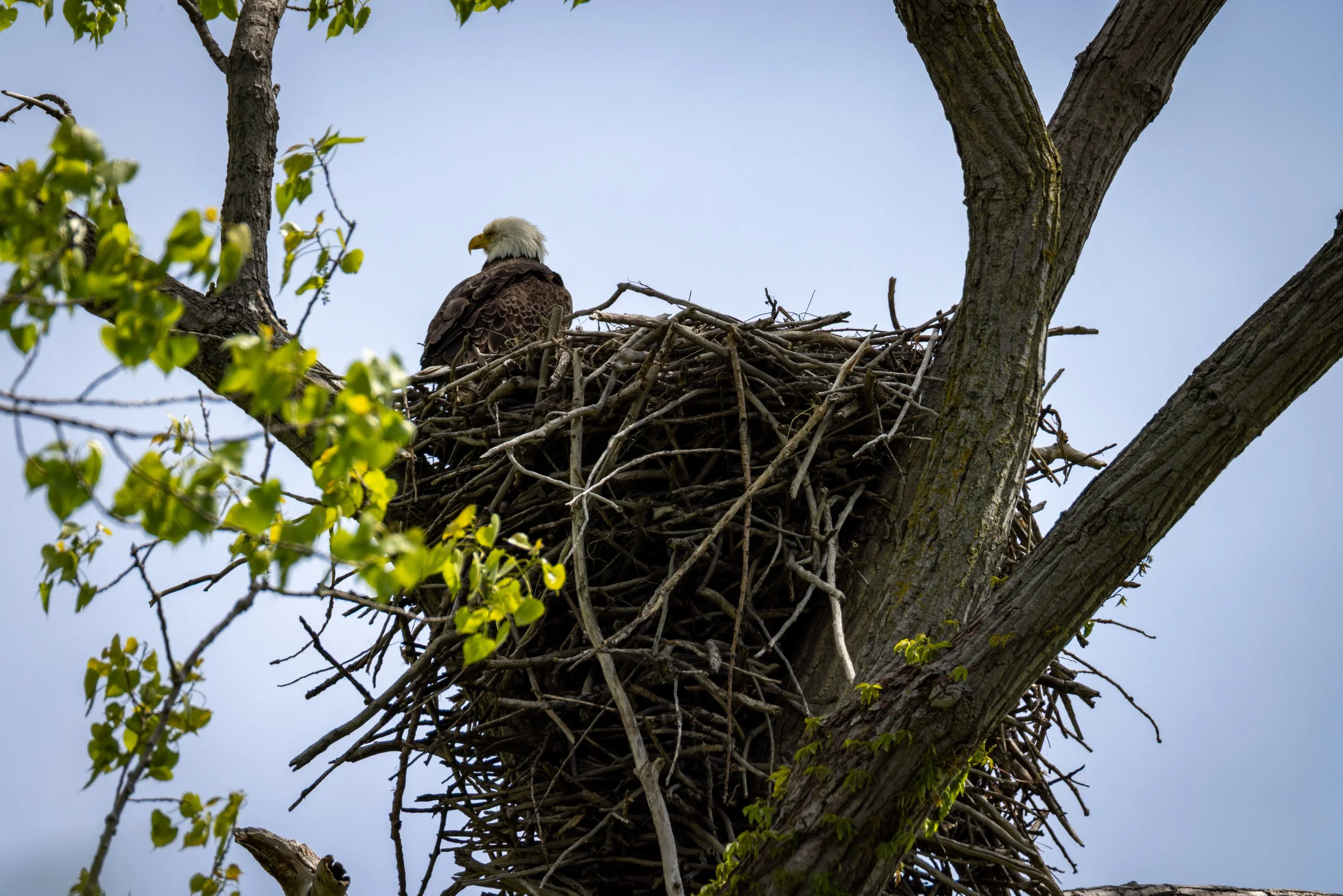
Bald Eagle (Haliaeetus leucocephalus)
If you attend the festival or simply hunt around the area at the right time you can expect to see surprisingly large numbers of warbler, oriole, blackbird, and other small neotropical species as well as a good mix of many other waterfowl and raptor species. Egret and heron are also present in the marshy areas, or flying from one spot to another, and pelicans can be spotted coasting about.
The reason for this abundance of birds is simple convenience for all of these species. On their way to their summer homes from their winter quarters, this is a great place to stop and rest in safety, grab a bite to eat, and then move on after a little while, maybe do a little speed dating. Many of these animals have flown hundreds or even thousands of miles, and can be less skittish than they might be in their normal habitats, due to exhaustion. While you shouldn’t try to walk up to or touch any of the wildlife, the bird’s fatigue means that this is a great time for birders to take pictures or observe with or without binoculars.
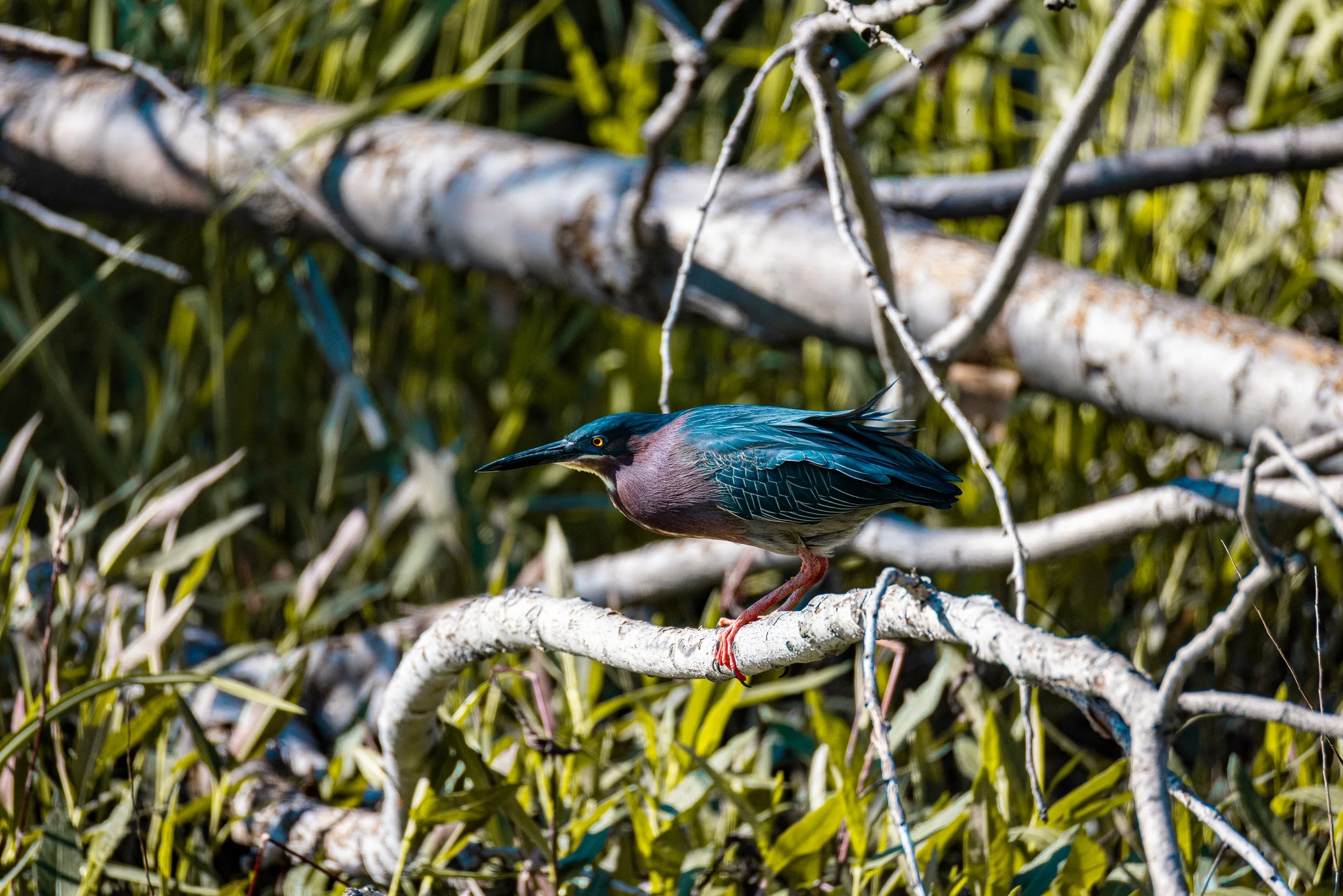
Green Heron (Butorides virescens)
The area of Ohio most densely populated with migratory birds at this time abuts Lake Erie to the north and includes all of the lakeshore from Toledo to Cleveland, and beyond. Cedar Point is the largest attraction that will draw crowds, aside from the lake itself. The lake life is prevalent here, as you will see from the water based names on every business, side street, and the thousand marinas you will pass. There is plenty to do aside from birding, if some of your party are not avian aficionados.
For maximum sightings, we suggest being highly mobile and having several places picked out ahead of time to look for birds, even if you will only be looking for one day. We suggest:
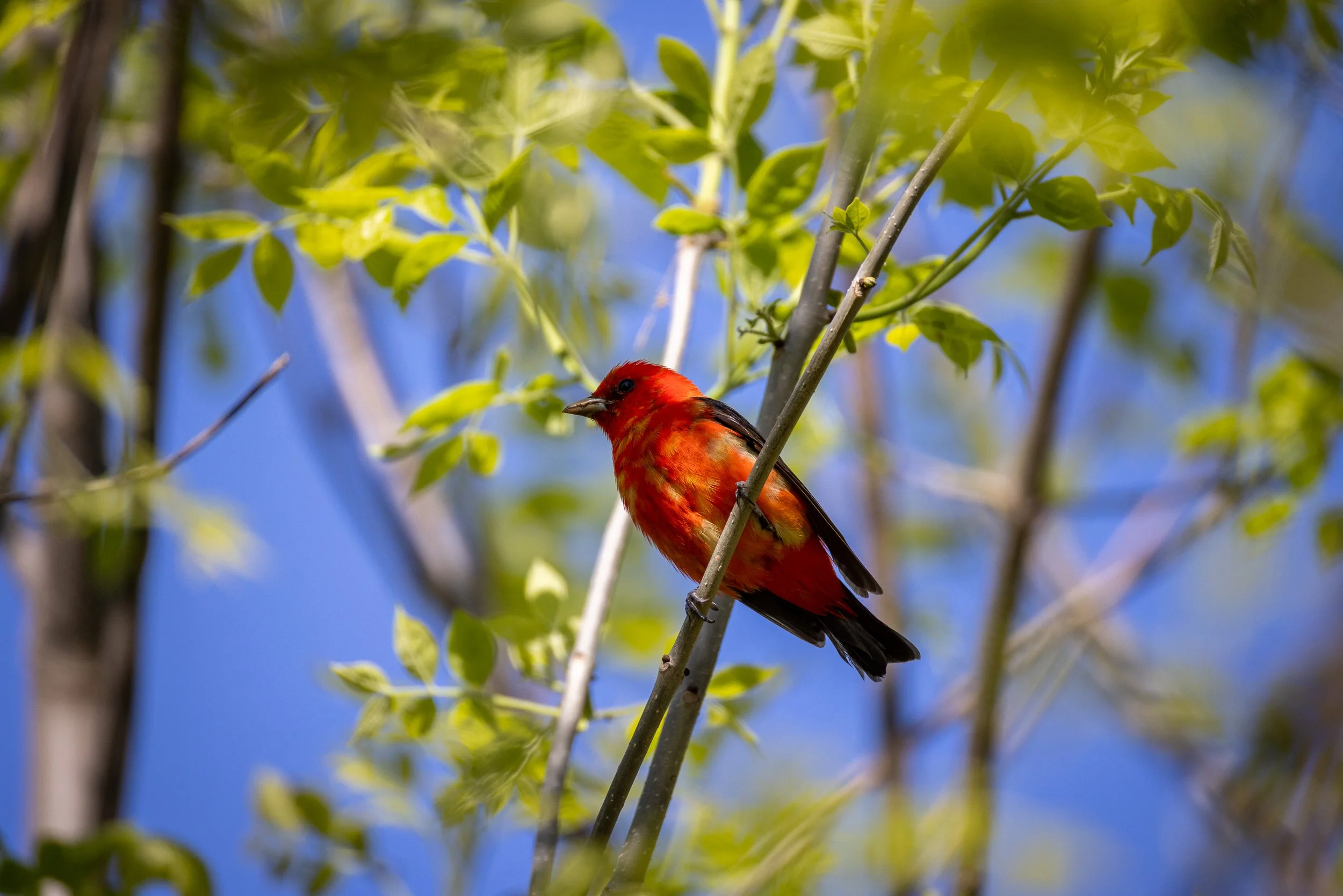
Scarlet Tanager (Piranga olivacea)
Magee Marsh
Great Egret Marsh Nature Preserve
Meadowbrook Marsh
Ottawa National Wildlife Refuge
Metzger Marsh
Howard Marsh Metropark
The most active times for birds in general are around first light and after, and when the sun is setting, when the heat of the day and the dark of night cannot hinder bird activities. There are owls and whippoorwills in the darker hours for those inclined to be up early or out late, just be aware of parking and park hours.
This is a case where the early bird gets the worm, and the early birder gets to watch. Magee Marsh in particular is a great place to go in the middle of the day. The extensive parking lots allow for many people to come at once and the boardwalks through the marsh seem to go on forever, so you can wander aimlessly and never really be lost.
We won’t go into the programs and activities planned by the BSBO for the BWIAB as they change annually, and you can head over to their website to see each year’s calendar and programming, but know that there is a fee to register to attend many of the events, and fees to attend many of the classes. Some are free for the public or free with the registration fee. There is merchandise for sale, there are educational classes, group walks led by learned educators, and less formal get togethers like trivia nights based on birding knowledge. If you are at all interested in birds, the outdoors, conservation, or a lot of wholesome company, maybe take some time in Northern Ohio during the next migration season. We enjoy it each time we go, and we hope you do to!