
Atlantic Puffin
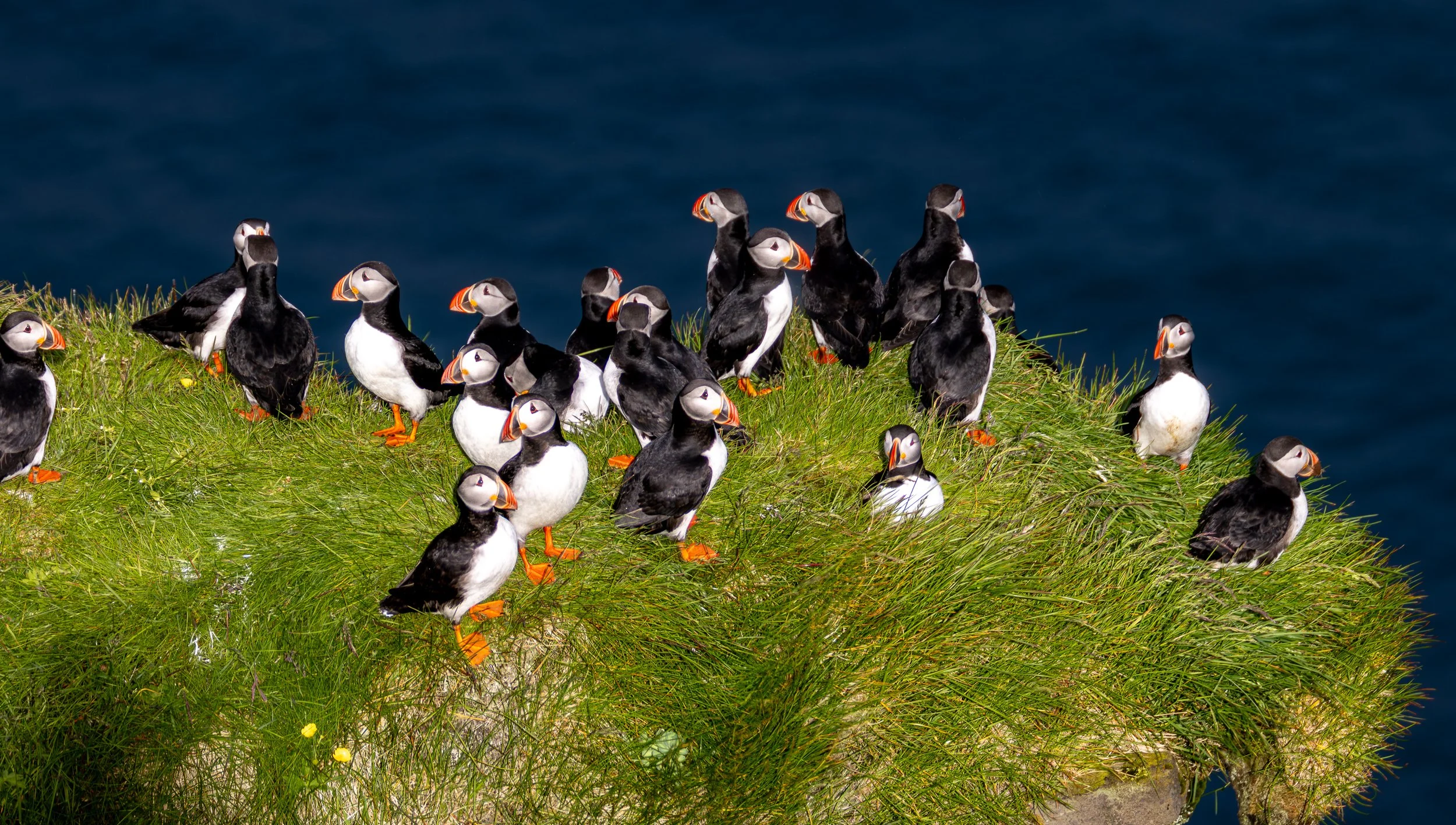
Though they live alone for most of their lives, on and in the waters of the Atlantic Ocean, the Atlantic Puffin swims and flies its way to Iceland each year to make little pufflings. Alone among birds, these puffins are monogamous to the point of meeting their mate every year at the same burrow. If the mate does not appear in time, they will take another mate, if one is handy, but if their partner then shows up, they dismiss the new partner, and take up with their original.
There are three types of puffins, the Atlantic, the Horned, and the Tufted, but only the Atlantic comes to the shores and cliffs of Iceland. They live all around the island, and in the greatest numbers on the Westman Islands (Vestmannaeyjar). They eat small fish and eels, and can be seen from June-August in Iceland.
Icelandic Raven
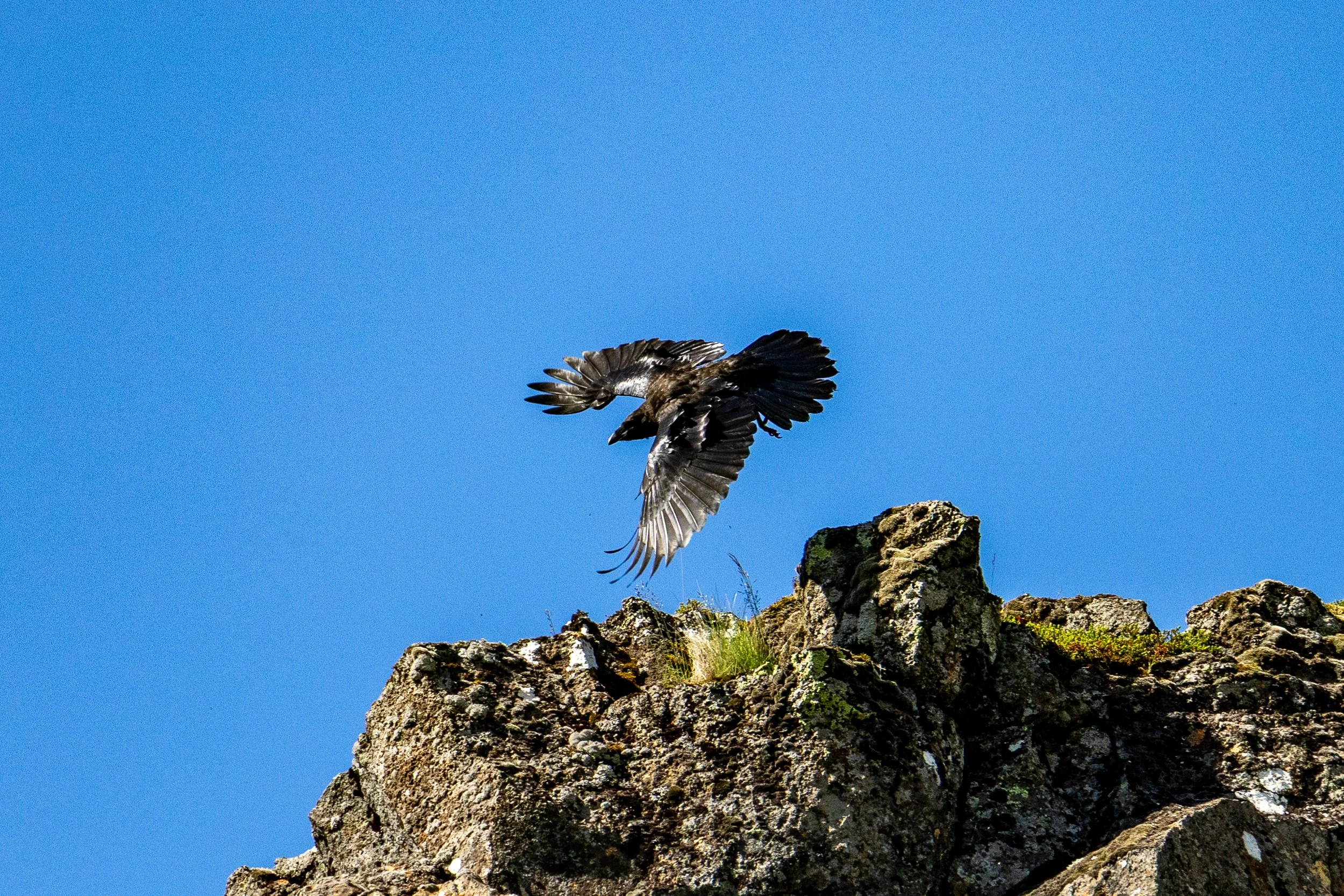
The ravens Huginn and Muninn, according to Norse legend, are kept by Odin. They fly the world each day and bring him news of worldly events, for above all Odin desired knowledge. Their names translate to Mind and Memory, respectively. Just as legendary, the ravens of Flóki-Vilgerðarsson helped him to find the island in or around the year 870.
Ravens are found all over the island and are one of the most easily recognizable birds here. They do not migrate, but winter in Iceland. They are a hardy bird, and integral to Icelandic folklore, history, and art.
Arctic Tern
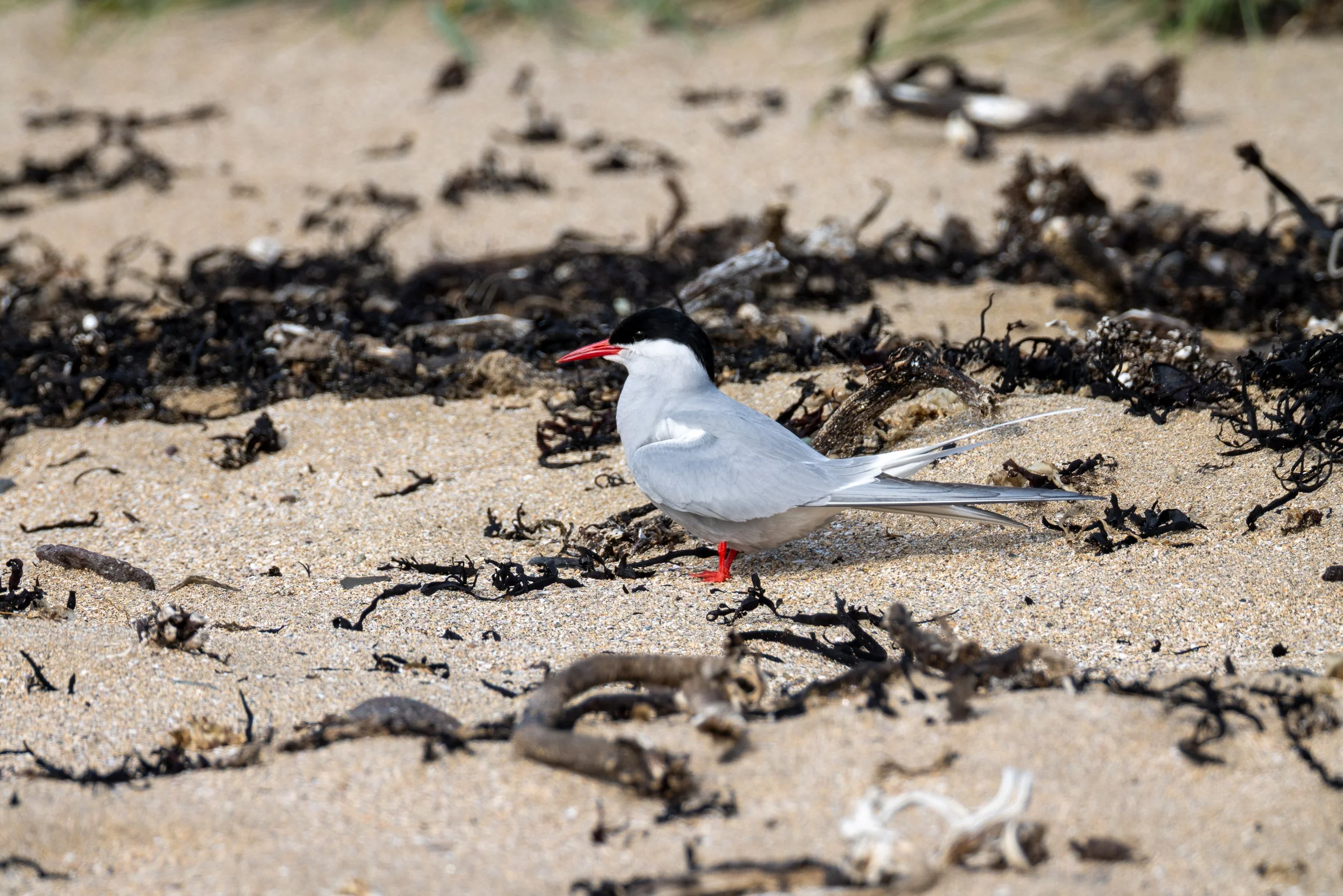
Terns are jerks. They’re ok if they’re just out for a bite to eat, flying around, hanging out. If you are near their nest though, they’ll get you. They’ll scream and swoop you, just like many other species f birds will. Except terns nest on the ground, oftentimes near where people walk, minding their own business.
Arctic Terns are the most prodigious of all flyers, making an annual round trip between their breeding and wintering grounds in the Arctic and Antarctic respectively. The shortest known distance between these two areas for any tern is 12,000 miles, meaning that the average tern flies a distance equal to the moon and back 3 times in its 15-30 years.
Eurasian Whimbrel
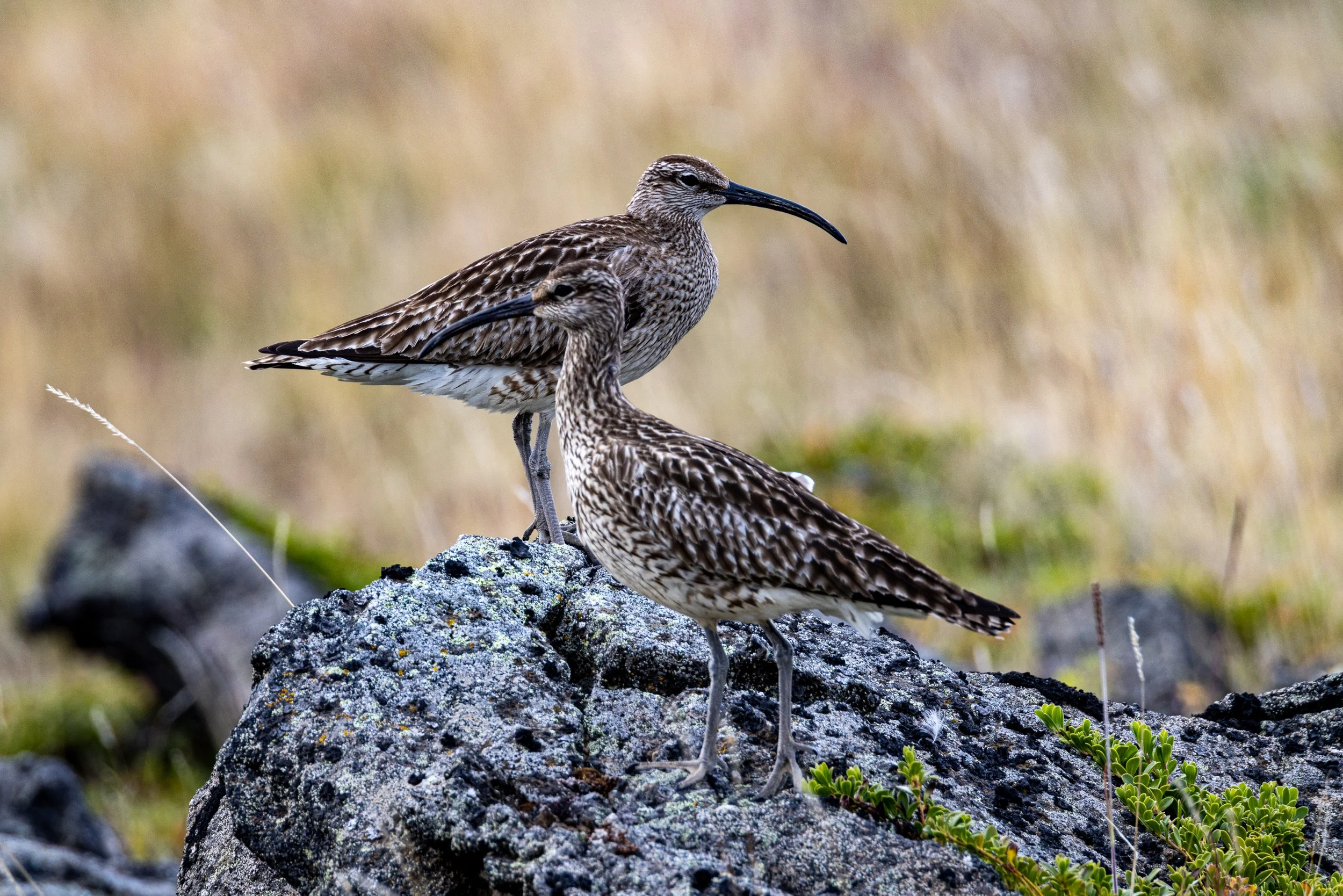
The Eurasian Whimbrel makes a little nest on the ground, barely more than a little divot, and lays a handful of eggs that it sits with. In the event of a potential predator, the mother will move a short way from the nest and begin to attract attention. If you see a whimbrel on the ground making noise and drawing you to it, it is likely there are eggs or hatchlings nearby.
They are a shorebird, and will rarely be found inland. You can often find tern, gull, snipe, nad godwit nearby. They have a distinctive cry, and are not shy around humans.
Graylag Goose
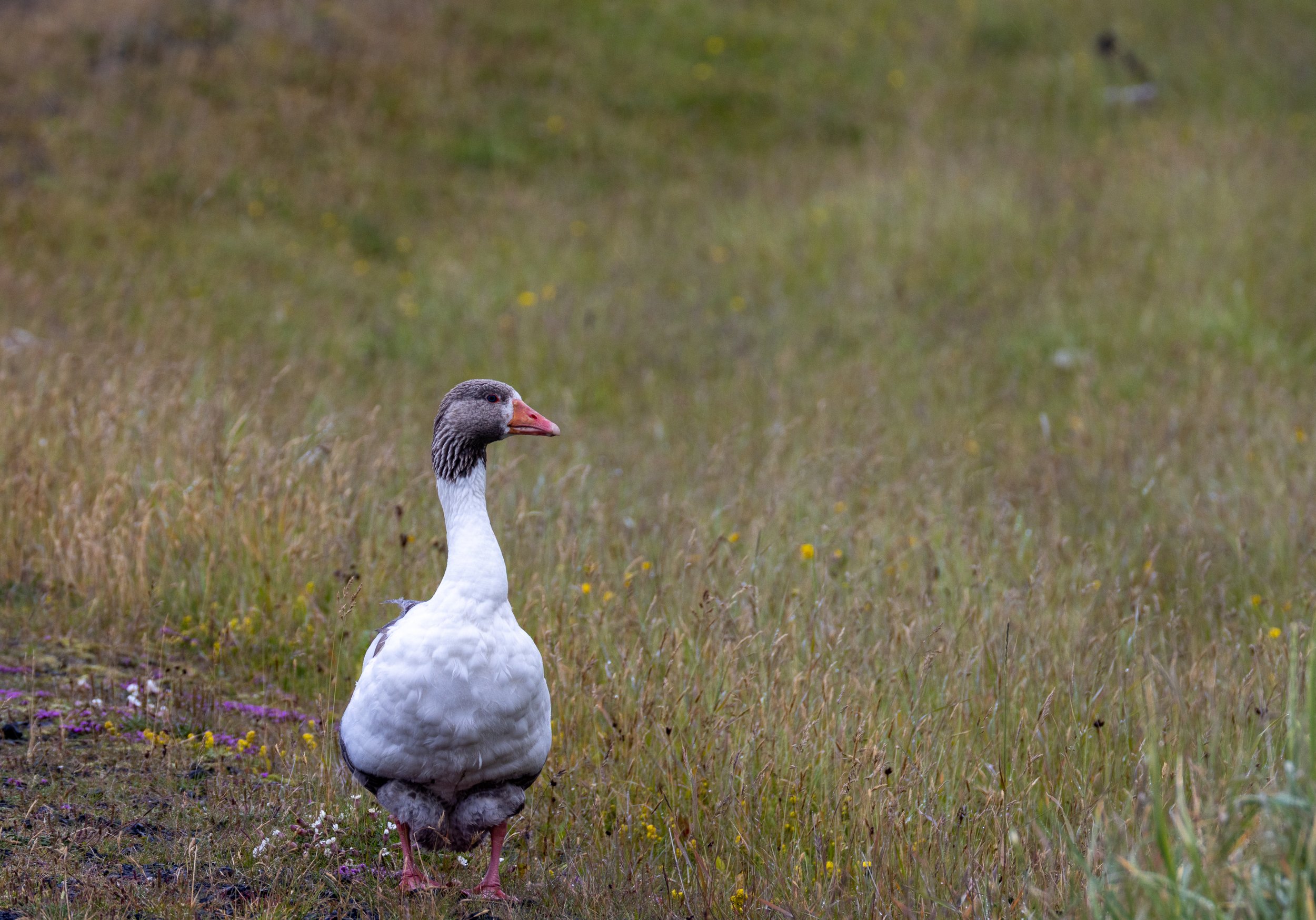
The Graylag Goose, Anser anser, is a true goose through and through. Large, oft obnoxious, and well traveled. Their natural range is as far from Iceland as India and China, and includes much of Europe and Asia.
Their feeding habits are similar to other geese and include plants and grains. They tend toward monogamy, though they can change mates, and they also commit dalliances, though their mates may object. They are usually heterosexual, though they can deviate from that norm as well. They are ruled more by guidelines than strict rules, you might say.
Greylags tend to flock, and seem to stick to that preference almost always, and make their nests on the ground, an informal and far from grand affair. Their clutch of eggs will be 4-6, though it seems that even at birth they can deviate from the norm.
Whooper Swan
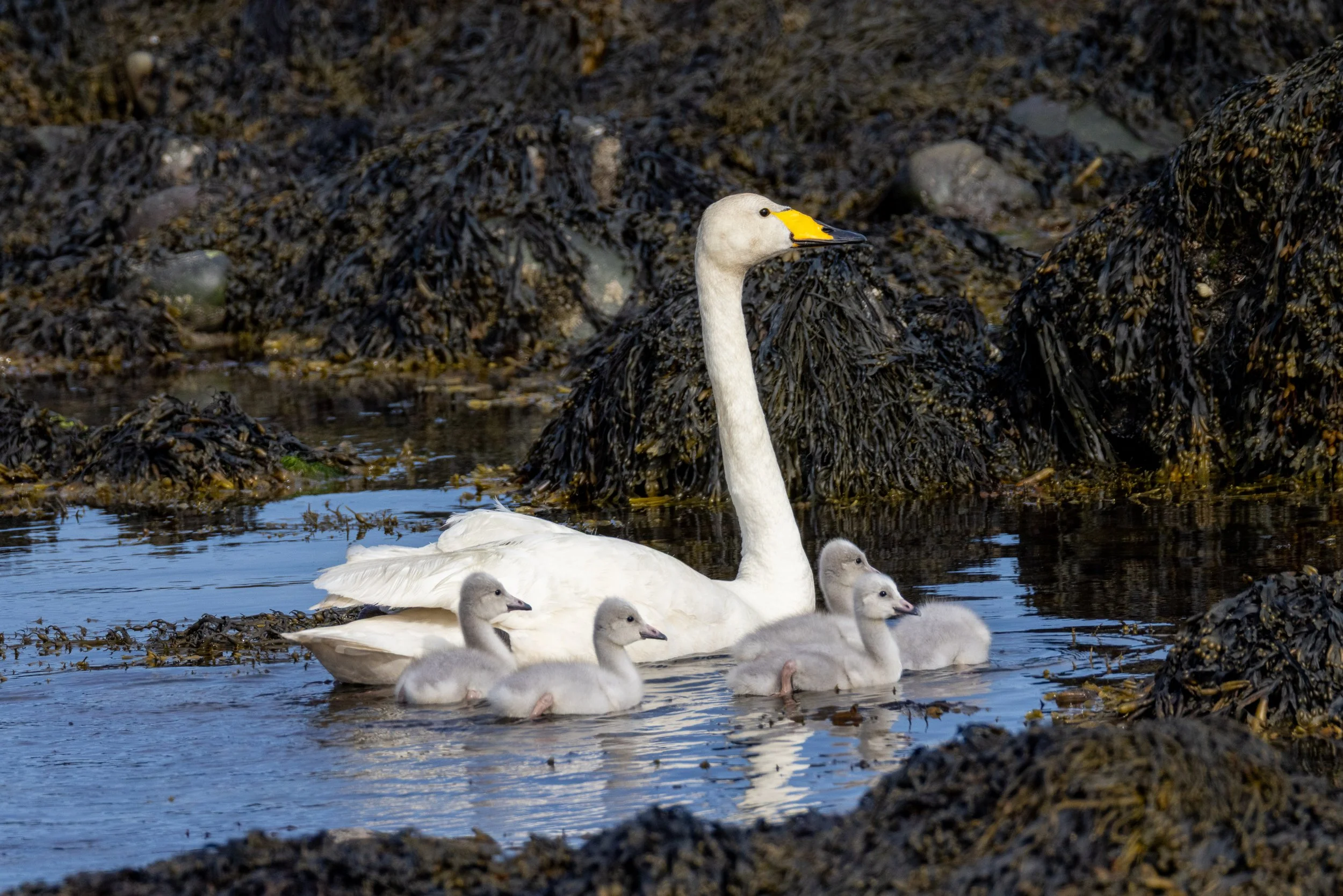
Whooper Swans, like many migratory birds, come to Iceland to breed and grow their ugly ducklings. They are similar in size and appearance to Trumpeter Swans, but hold their necks straighter, and have bright yellow coloring between eye and beak.
Cygnus cygnus ranges from Iceland in the north and west, down to the Mediterranean, and east to the end of Asia and the Pacific Ocean. They are among the heaviest flying birds and although they usually fly at relatively low heights and at about 60 miles per hour, they can fly faster and considerably higher, having been recorded at 27,000 feet.
Eurasian Oystercatcher
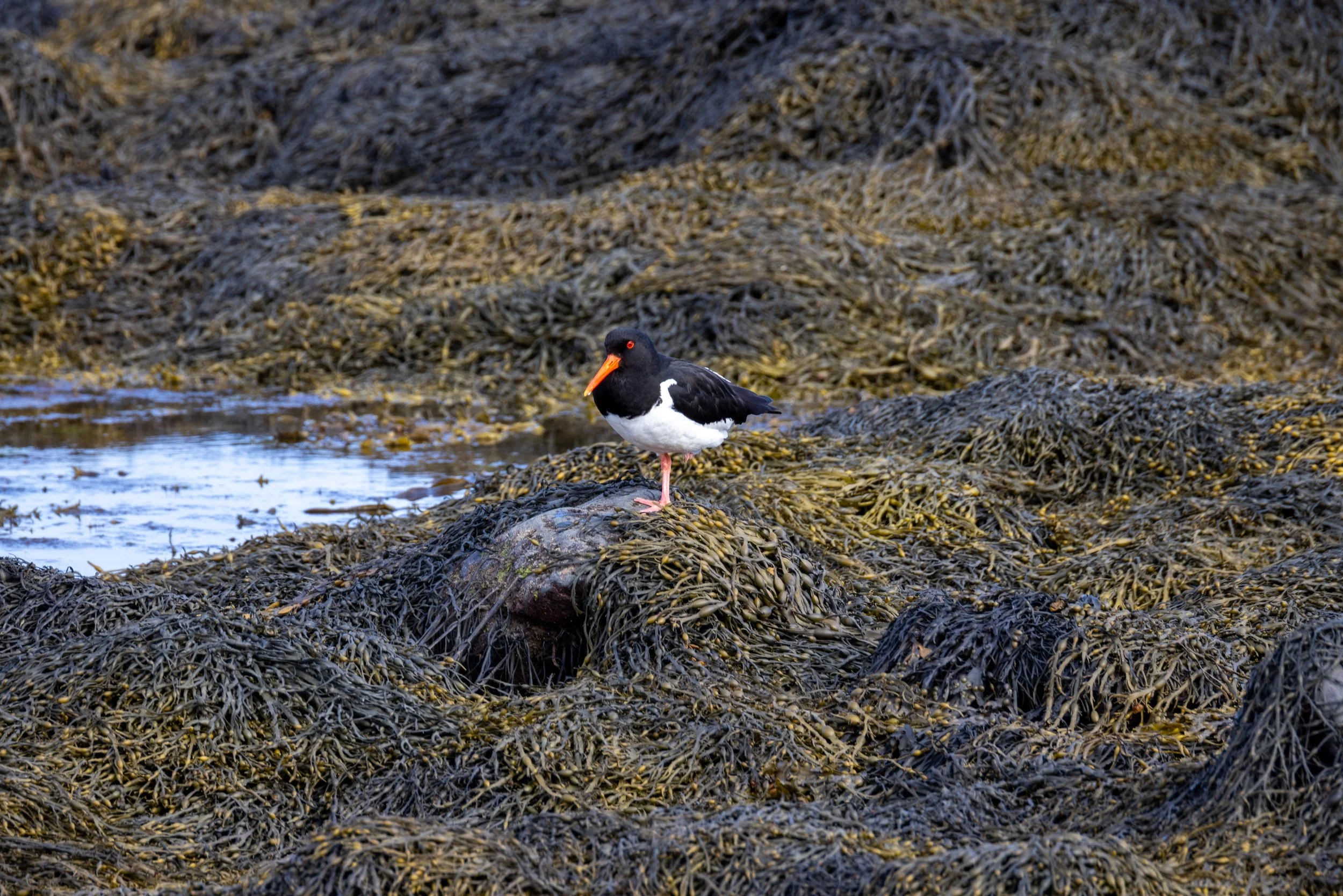
Haematopus ostralegus, the Eurasian or European Oystercatcher. Black and white, long orange bill and legs, and red eyes. Simple, easy to identify, everywhere along the coast in summer. What’s not to like?
This wading bird eats mostly sea creatures like oysters and mussels, as its name suggests. Before being called Oystercatcher though, it was known as a “Sea Pie”, though if that was for similar derivative reasoning, I cannot say.
These Hamburglar looking seafood lovers lay clutches of 2-4 eggs at a time, and are pretty much ready to go out of the egg, taking very little time to start moving around and becoming independent. Also as the name suggests, they range across Europe and Asia, and are fairly widespread.